
The litle Deal clincher
Are Ordinary Citizens Complicit in the actions of their Government and Leading Institutions

Complicity Dissertation
This section features the publication of my complicity dissertation for the MA in Philosophy from the Open University where I graduated in March 2023. Are Ordinary Citizens Complicit in the actions of their Government and Leading Institutions, benefitting from a professional edit and chapter photographs. Hopefully readers find it an interesting read, making a pertinent point regarding inherent complicity of political power and responsibility.
Introduction
This book was initially written as a dissertation for a master’s degree in philosphy. The idea arose from Professor of Philosophy at the Open University Derek Matravers’s discussion with his OU colleague Doctor Cristina Chimisso concerning individual complicity in the immoral actions of our government. The author’s interest developed after reading Professor of Ethics at Melbourne, Australia Janna Thompson’s article on political complicity. The book presents a substantial case for ordinary citizens not being complicit in their government’s actions. The first argument discusses the type of guilt applied without the possibly culpable population shirking responsibility, and the second discusses that culpability should not apply to future generations retrospectively. Thompson shares her point with Professor of philosophy of social phenomena Margaret Gilbert at the University of California concerning the notion of founding responsibility on commitment, where such commitment arises from the collective actions of member groups. There follows an examination of the philosophical principles of complicity, including Williams’ reappraisal of eighteenth-century philosopher and politician Edmund Burke’s standpoint concerning political representation in a parliamentary system with analysis by politician and writer Jesse Norman.
The argument develops different mitigations of responsibilities for ordinary citizens and elected representatives in a democracy. German-Swiss psychiatrist and philosopher Karl Jaspers discusses a post-war analysis of the types of guilt cited by Thompson and Gilbert, respectively. Jaspers notes the consequences of responsibility on the post-Nazi German national character with a review by political scientist William Ebenstein critiquing Jaspers’ guilt concepts and the national habit of obeying or rebelling against authority. Arendt suggests that authority grounded in continuous group participation in joint actions, with collective guilt feelings (later discussed by Gilbert) establishes complicity for those actions because they channelled state authority into hierarchical groups of politicians, military, or civil servants. An anecdotal example in the text shows the effects of unending intergenerational complicity to which, Gilbert claims, future citizens commit themselves to injustices even before birth.
Gilbert examines collective guilt (citing Kutz and Jaspers) when ascribing group accountability for complicity in unjust actions (with reviews by Larry May and Gilbert). Professor of Law at Berkley, California Christopher Kutz’s case for complicity concerns hierarchical culpability in corporations and questions the concept of control regarding ownership as a diminishing role in shareholders vis-à-vis ordinary citizens. This book references French Philosopher Michel Foucault’s comment on institutions’ documentary rigours and discipline techniques that shape democratic processes and hierarchical institutions, limiting citizens’ knowledge and access to decision-making, thus diminishing their guilt, without negating their responsibility entirely. It also references Germany’s historical difficulties concerning reparations with comments on the possible outcome concerning Russia. The conclusion discusses problems regarding political and professional leaders’ power.
This book discusses and analyses the differences in the roles and activities of ordinary citizens and their governing politicians, including senior civil servants, the military, and professional and industrial leaders, to determine whether, together or separately, they are complicit in conspiring and thus blameworthy for actions judged as injustices.
In this book, complicity involves acts with others that are judged (in a trial, inquiry or later by societal reflection) as unlawful or morally reprehensible and therefore, the actors are accountable for and culpable of crimes that require punishment and reparations to allow society or nations to heal and live harmoniously.
The term ordinary citizen refers to people who work, pay taxes, vote, and live alongside those who form the governing classes or senior managerial roles within national institutions or industrial entities, where many of those ordinary citizens are stakeholders through their savings and pensions.
The exercise is not to disagree with the philosophers mentioned below supporting reparations for political, moral, or criminal guilt but to advocate that there are degrees of culpability and differences in the type of guilt associated with their participation. This book further examines how such attributions of blame require a pluralist approach to create a harmonious society.
The judgment of past events alters over time. Therefore, it is wiser to hold trials and inquiries immediately after events to hold the guilty (especially those in executive, political or managerial positions) accountable for their actions and provide reparations to the victims promptly.
This book argues for time limits, especially for non-participatory citizens, such as children born after the injustices ceased and those who were not complicit. Time limits regarding culpability are essential for successful ameliorations across nations and generations.
This argument primarily focusses on democratic nations. However, they also discuss citizens’ complicity in authoritarian states during reprehensible activity, such as Germany during the Nazi regime and Russia after its February 2022 invasion of Ukraine.
In many cases, the victor writes or rewrites history for their citizens. Russia and NATO members have given their citizens various opinions on which to judge their governments’ actions during the recent conflict.
The touchstone article for this book on complicity is provided by Janna Thompson’s (2006) Political Complicity: Democracy and Shared Responsibility, which discusses the complicity concepts in Kutz’s book and Gilbert’s article on collective guilt.
Thompson (2006, p.154) suggests that “intuitively, we are inclined to blame citizens of a democracy if they do nothing when their government is committing injustices”. Thompson (2006, p.161) states, “there’s something right about Gilbert’s attempt to base responsibility on commitment where such commitment arises from the collective actions of member groups”.
Thompson (2006, p.160) states, “Gilbert believes that a person bears responsibility for the activities of the group that she is committed to” and even goes so far as to state this is true even “if the wrongful action occurred before she was born”. Additionally, she says that Gilbert has “no doubt that citizens have generally committed themselves as plural subjects” (Thompson, 2006, p.161).
Her appraisal of Gilbert forms part of the philosophical argument when applying political and moral guilt to not only the political classes but, as Professor of Philosophy at the University of Lancaster, UK David Archard (2013, p.778) argues, to ordinary citizens who democratically authorise pollical actors through processes such as elections. Archard’s article does not suggest how or when such implications should cease or whether implicit culpability is never-ending.
This book addresses that issue to counter Gilbert and Archard’s perspective of unending complicity and applying political and moral guilt to ordinary citizens. It provides insights into the effects of unending complicity and the perplexities of living with responsibility concerning the actions of previous generations while questioning the relevance of that guilt to younger generations and providing anecdotal experience from a friend of the author.
The book discusses types of guilt and whether differences in the democratic processes, privileges of office and access to knowledge preclude those with limited access to debate and decision-making, other than exercising their rights or duties to express an opinion or vote on manifesto promises. Thus, it does not negate citizens’ guilt but categorises it and empowers citizens and society to improve.
Chapter One: Complicity
Complicity is the condition of involvement with other individuals or groups in unjust or unlawful acts. It applies whether others witnessed or were affected by those acts or not. By law or binding agreements, those who commit unlawful or unjust acts are accountable for their actions and liable for reparations to their victims.
To be morally culpable for a fault or wrongdoing, people must be guilty, blameworthy, and answerable for their actions. This author argues that culpability for criminal activities is the government’s responsibility, including when those illegal activities are carried out by ministers, civil servants, or the military.
Arguably, dissenting politicians are less criminally culpable. Their complicity in injustices is comparable to ordinary citizens who are complicit only under certain circumstances.
The author proposes that after the cessation of unjust acts, a timeframe for reparations and punishing guilty parties is set and upheld. Because of the complicity of ordinary citizens, such a period should be thoroughly defined and finite to allow healing and trust between affected parties during the reparation period. Not setting time limits for those deemed culpable for reparations exacerbates animosity. It also condemns, without trial, those innocents of the moral outrages perpetrated by previous generations, for example, acts committed in Nazi Germany discussed below.
For government agents and ordinary citizens to be deemed culpable requires a beginning and endpoint to an episode of injustice to enable charges and demands for reparations. Otherwise, those acts may provoke continuous hostility between adversaries until one or other society collapses. For example, Somalia is a collapsed state riven by unceasing religious and ethnic conflicts, criminal activity, and political instability. The Israeli and Arab conflict is another example of never-ending hostility. So far, no entity has had the opportunity to levy guilt and complicity or propose a resolution.
Gilbert’s point on responsibility is founded on commitment, where such commitment arises from the collective actions of member groups. There appear to be contra-positions between the complicity of ordinary citizens in the actions of their government at the time of the injustices and the placing of time limits later, which limit the complicity of younger or future citizens. This book argues limitations to culpability are an ameliorating factor in providing a long-term resolution.
Chapter two discusses separating and mitigating conditions of responsibilities of various members of a collective group arising from the earliest days of party politics in the eighteenth century. Kutz’s phrasing echoes the American colonialists’ revolutionary slogan of no representation without taxation, in similar terms of no participation without implication, drawn from his Complicity Principle, in which “intentional participation provides a special basis for ascribing individual members’ actions to the [group], and to the group members individually” (Kutz, 2000, p.138).
Kutz’s (2000, p.122) Complicity Principle states that “I am accountable for what others do when I intentionally participate in the wrong, they do or harm they cause”, and as its object, “I am accountable for the harm or wrong we do together independently of the actual difference I make”. He further explains that while societal values exonerate the individual, the principle of complicity implicates or incriminates the individual. Thus, concerning the individual starting point of participation in something “that grounds individual participation rather than [prevents it, provides the] accountability for [the resultant] collective harms”. (Kutz, 2000, p.122).
These are strong claims where the scope of blame or accountability is widespread within the population. Furthermore, Kutz claims this is well-established in our “institutions” and “ethical practices”. However, it is inconsistent with the “Common sense individual difference and control principles” discussed below (Kutz, 2000, p.122).
Thompson (2006, p.153-4) claims, “In a democracy, one way that citizens can put a check on the activities of their leaders is to vote them out of office” and that “we are inclined to blame citizens of a democracy if they do nothing when their government is committing injustices”. The former is an essential condition for a democracy to function, and the latter highlights citizens’ inertia as criticised by others.
When confronted by wrongdoings perpetrated by their government, army or civil authority, citizens tend to deny such accusations as German citizens did in the 1940s with the Holocaust. Different types of guilt associated with the actions of Germans are analysed below by Karl Jaspers. The likelihood of a re-occurrence of such denial of wrongdoing and supporting political leadership is highly likely to emerge from the actions of Russia attacking Ukraine.
Thompson (2006, p.154) states when your “democratic government has committed an injustice, and it continues unchallenged by citizens, ordinary citizens insist they bear no responsibility for the continuing injustices and justify their inactions by the fact that nothing [that] could have been done would have made a difference to the outcome”.
In contrast, how can someone take credit for an action when nothing they did made a difference? Actively or passively, one’s responsibilities are “no greater than that borne by the subject of a dictatorship, where punishment is meted out for protest and voting is meaningless” (Thompson, 2006, p.154). For example, the case of Russia in February and March 2022 draws distressing parallels in anti-war protests and arrests of protesting citizens.
Philosopher Larry May (1992, quoted in Thompson, 2006, p.154) comments that “social tragedies are made more likely due to our attitudes and our failures to act collectively” when “common-sense reasoning […] is a recipe for political passivity”. Thompson comments on May and Gilbert’s assertion of personal responsibility for group activities creating a moral obligation for ordinary citizens to vote in an election against their leaders or at least protest their activities, effectively or not.
These points resonate with events in Germany during the 1930s and 1940s of complicity with injustices unchallenged by ordinary citizens resulting in the Second World War and the Holocaust and the guilt and reparations demanded through the US-led Marshall Plan from 1945 onwards.
Thompson (2006, p.154) states that the “morally obnoxious” state of being no more responsible than a “subject of a dictatorship”, whether active or passive in their actions, counters the inclination to blame citizens for doing nothing. He further states, “On the other hand […] seems like simple common sense as, in general, we do not hold individuals responsible for failing to act when nothing they do is likely to affect the outcome through permitting governments to continue their injustices by failing to remove them from power” (Thompson, 2006, p.154).
Thompson (2006, p.155) justifies her point by adding, “Not all citizens will reason as you do”, where voting can be a social duty, a sense of maintaining party loyalty, just something to enjoy, or a keen analysis of a range of local and national political issues. These form valid reasons for voting in an election, notwithstanding those issues other fellow citizens insist are great injustices, such as the invasion of Iraq in 2003 or the continuing investment in fossil fuels.
Elections are how new governments gain a mandate for legislation and not a vote on any legislation itself. Ordinary citizens are excluded from the parliamentary process, where only elected politicians vote on legislation and policy decisions are implemented by the executive.
Thompson (2006, p.155) gives the example of witnessing a car accident and comparing it to voting, in which reporting the incident to emergency services will make all the difference to the outcome if nobody else does it. In contrast, voting, although it’s improbable that nobody else votes, an individual vote “is not going to make a difference” to the overall outcome. (Thompson, 2006, p.156). Thompson (2006, p.156-7) states, “a problem concerning individual moral responsibility should have a moral answer” and attacks the “presupposition” of the Individual Difference Principle that Kutz regards as “inadequate for cases of collective action”.
The Individual Difference Principle states someone is “accountable for a harm only if what [was] done made a difference to that harm’s occurrence” as a basis for specifying accountability with “the object of that accountability: [thus being] accountable only for the difference [an] action alone makes to the resulting state of affairs” (Kutz, 2000, p.116). However, a solution to individual moral responsibility and a critique of this principle is suggested by rejecting the presumption an individual is only committed to act or respond to an occurrence, such as wrongdoing or an emergency, if they have “reason to believe that it will be instrumental in bringing about the desired outcome” (Matravers, 2022).
Kutz (2000, p.2) suggests that a “domain of complicity” exists of “cultural and legal practices” that surround an agent’s association with harm that is resolved by interactions with others. These “social features” comprise people’s moral reactions to “mediated” relations to [such] harm with “reactions ranging from discomfort, to regret to guilt, and they are judged by [their] victims and onlookers. They are also often punished or compelled to make restitution and repair” (Kutz, 2000, p.2).
Difficulties surrounding “collective wrongdoing” have existed since Aristotle’s time, where “the plan to do wrong originates in one person”, thus reducing the problem of shared responsibility to the “individualistic question of whether the threat was grave enough to defeat any element of choice” (Kutz, 2000, p.2).
Kutz (2000, p.2) concludes that “responsibility appears wholly a function of individual choice”, suggesting that group guilt and complicity in the actions of others are harder to apportion due to individuals making their own choices.
Kutz (2000, p.2) notes that Immanuel Kant “reduced cases of apparently collective responsibility to questions of individual choice and action” and used the example of lying to a violent criminal about the whereabouts of a friend to prevent subsequent harm. In contrast, Kant answers the question of responsibility purely in terms of facts about you, in this case, what you intended and what you caused, without regard to the aims and acts of the murderer,” implying that “a virtuous will” insulates you “from responsibility” while the “vicious will implicates you” (Kutz, 2000, p.3).
Kutz (2000, p.3) recognises that the complexity of “complicity and its uncertain terrain poses problems”, such as collective actions, for “responses called for” to address “complicitous relations to harms […] seem to conflict with a set of principles of common-sense morality and moral psychology that [portray] our common, non-philosophical, understanding of individual accountability.”
These Complicity and Individual Difference principles, also mentioned by Thompson, concern intentional participation in a wrong, making a difference in an occurrence and the Control Principle. This holds citizens accountable for events over which the agent has control and whose occurrence could be prevented. Kutz (2000, p.3) describes “these principles,” whether applied to institutions, the market or the workplace, as a “standard, regulative element of our ethical practices of allocating responsibility”.
Thompson (2006, p.157) argues that Kutz “regards it as inadequate for cases of collective action” and argues for “a better answer” in which the responsibility of individuals for collective actions is not determined by the contribution they make but by their participation in a joint venture where individual “intentions” amply “overlap” with other members of the group.
With the example of a solitary motorist who, Thompson (2006, p.158) notes, provides a minuscule reduction to overall pollution levels by his emissive actions, the citizen appears “to lack a moral reason for voting or protesting”. Thompson (2006, p.158) suggests Kutz’s position has “some plausibility” in that “If all the adult citizens of a country enthusiastically support an unjust war, it seems reasonable to regard all of them as complicit in the evil”. Noting the plausibility of Kutz’s theory, he adds it is just too “far-fetched” to suggest that ordinary citizens, like all motorists, have the same motivations and overlapping intentions whilst voting in an election as motorists when choosing whether or not to drive or change to public transport (Thompson, 2006, p.158-9). Everyone who shares a similar ethos has “implausible” and “overlapping intentions “, which scarcely exist enough to accuse ordinary citizens of complicit evil (Thompson, 2006, p158-9).
The pertinent differences in attributing responsibility are the active or passive intentions of citizens, who “ought to have as members of a democratic polity” the ability to express themselves through “institutional means” […] by “eliminating systematic causes of injustices, remaking their institutions, [or by] changing policies and laws, and selecting just leaders” (Thompson, 2006, p.159). Except for the latter, chapters two and three discuss that citizens’ responsibilities and intentions are overstated in the context of a parliamentary democracy.
Thompson (2006, p.159) notes the argument for collective responsibility, which rejects the “Individual Difference Principle.” Gilbert (1996, quoted in Thompson, 2006, p.160) states, “It is the commitment to being involved in joint action with others rather than the sharing of intentions which makes members of a group collectively responsible.” Thompson (2006, p.160) notes Gilbert’s firm conviction “that a person bears responsibility for the activities of the group that she is committed to” and that extends to “even if the wrongful action occurred before she was born”, adding even “if her nation committed unjust acts in its earlier history, then she bears responsibility for these acts.”
Noting that Gilbert holds “no doubt that citizens have generally committed themselves to their nation as a plural subject,” Thompson (2006, p.161) writes that that explains why, in Gilbert’s account of collective responsibility, “they so often feel guilty about the injustices of their nation, party, or company even when they played no role in committing those wrongs”. It also shows the difficulty in applying collective guilt to individual participation and why some “have no role in committing these wrongs” (Thompson, 2006, p.161). Besides voting on manifesto promises or feelings of kinship, ordinary citizens have no direct involvement in the wrongdoings of government or institutions that perpetrate them.
Thompson (2006, p.161) notes Gilbert’s failure to explain “the difference between the collective responsibility of citizens in a dictatorship and their responsibility in a democracy” in the complicity of ordinary citizens to national commitments. Noting there are difficulties in “explaining how citizens acquire this commitment [to a nation] and understanding what it means” and thinks it “easier to explain” her notion of commitment “to making a democracy work” (Matravers, 2022).
It raises the question of “accepting leaders govern in their name” and challenges the concept that they must “take responsibility for [the actions] of their government” and “stresses the complexity of the relations between democracy, active citizenship, responsibility, and complicity” (Matravers, 2022).
For example, concerning the 2003 US-led invasion of Iraq, Thompson (2006, p.161) says if “We are sending troops to Iraq […] it is far from clear what kind of commitment [is meant or made] by the use of ‘We’ or by participating in common activities like paying taxes, national commemorations or indeed well-understood conventions such as signalling a willingness to dance”. However, such social conventions, from Gilbert’s perspective, demonstrate the commitment to think or act as a member of the nation.
The methods are obfuscated by questioning Gilbert’s assertion on citizens’ commitment and understanding its meaning regarding political membership. Hence her remark about who “we” are and what the commitment “entails” as individual members of a plurality (Thompson, 2006, p.161). This consequently produces the evaporation of the individual’s responsibility through various motivations to express national solidarity or participation.
Gilbert (2006, p.128) uses the phrase “commitment of the will” about a commitment arising “solely from an act or state of a will”. He affirms that the “will in question in some sense binds the subject of the commitment”. However, there are “different levels or grades of commitment, corresponding to different ways in which those who have such a commitment may be said to be bound”, suggesting different degrees of complicity for ordinary citizens, who are removed in terms of political responsibilities, from actions which can lead to injustices (Gilbert, 2006, p.128). She also uses the first-person plural pronoun to refer to not “a plural subject but rather to certain individuals who may (at the time) be conceived of as members of a plural subject” (Gilbert, 2006, p.145).
Thompson (2006, p.163) acknowledges that valuing democracy as a political process by participating in elections “does not entail that [citizens] have an individual responsibility to do such things as vote in an election” and “If they have different perceptions of the requirements of their shared commitments, then, how are they culpable or complicit with the actions of the guilty parties?”
Thompson claims that citizens’ commitment to democracy entails them having some responsibility, and their participation, by voting or abstaining, in an election shows a degree of commitment on their part. However, making a democracy work is more about the government’s actions.
After ordinary citizens provide the political mandate to form a new government, the government’s actions thereafter, such as deciding on national policies or intervening in international developments, do not stem from the requirements or commitment of ordinary citizens but are the purpose and point of the elected government. Again, this book does not argue that citizens have zero complicity in their government’s actions concerning injustices committed during that government’s period in office using their freely given political mandate. The considerable difference in complicity between ordinary citizens and the political classes is demonstrated through the types of guilt associated with such collaboration discussed in chapter three. Nevertheless, they are beyond the commitment required of ordinary citizens to participate in a public meeting or civic action group to discuss election manifesto issues.
Thompson (2006, p.165) states that by committing ourselves to solve problems through joint action, the “Individual Difference Principle is irrelevant to [her own] decision because […] to achieve a desirable goal we [must] make commitments to each other to act.” The relevant point is where this starts and effectively finishes for the ordinary citizen and whether it creates culpable complicity in any unjust actions in perpetuity, as argued by Gilbert. Thompson (2006, p.p.166-7) adds, “To most citizens making their democracy work does not merely mean perpetuating a system which has periodic elections” but one in which ordinary citizens can “act collectively to protect common goods and to ensure that justice is done. The actuality is to partake in political processes beyond one’s simple civil duty to vote”.
In contrast, Thompson (2006, p.167) adds, “Citizens have different ideas about common goods and justice and with their commitment to acting with others and making democracy work […] they have fulfilled their commitment. They share no further responsibility for the fact that what they regard as right has not prevailed.”
Arguing that a theory of collective responsibility is insufficient to assign responsibility for what people do or do not, Thompson (2006, p.167) restates that by committing themselves to their democracy, “citizens become part of a joint activity and must share responsibility for whatever makes it happen. The minority needs to accept not just their leaders and decisions they oppose but to take responsibility for their government’s actions, including such things as reparations for injustices perpetrated, including unjust wars, in order to undo harms that were done” (Thompson, 2006, p.167).
Notably, another kind of political activity expresses itself through the actions of elected politicians via parliamentary processes combined with the actions of appointed professionals in government agencies and national institutions separate from ordinary citizens. Although connected to these actors, ordinary citizens have a different relationship with the decision-making processes of their government and its resultant activities. Meanwhile, Thompson (2006, p.167) argues the opposite, “that through committing themselves to make democracy work, citizens become part of a joint activity and must together share responsibility for whatever is required to make that activity possible”, albeit with little knowledge, no control, or direct access to resources which reduce their degree of complicity in injustices committed.
The argument made to avoid criminal culpability for non-elected or non-participating ordinary working citizens is to express other types of guilt and culpability within the scope and period of reparations set by those prosecuting such acts, for example, the Allied actions in the aftermath of World War Two. However, once injustices cease, non-elected or non-participating ordinary citizens, especially infants or those born later, bear no further responsibility.
Nevertheless, accepting responsibility for government action with reparations for injustices needs to be accepted by those who have given their political ascent to their government during the period in question, with the atonement “to undo harms that were done by their government” to their victims (Thompson, 2006, p.167). This must be shared by those involved and remains critical to the healing process. The criminal culpability remains with the executive powers who act in the name of ordinary citizens.
Chapter Two
Thompson and Kutz’s positions regarding the complicity of ordinary citizens require an understanding of why and where their complicity arises in a modern parliamentary democracy.
Professor David Archard (2013, p.777-8) states early in his article that his concern “is less with the problem [of dirty hands] as it allegedly affects those politicians involved, but more with those who democratically authorise political actors”, thus highlighting the problem of the complicity of non-political actors which forms the crux of this book.
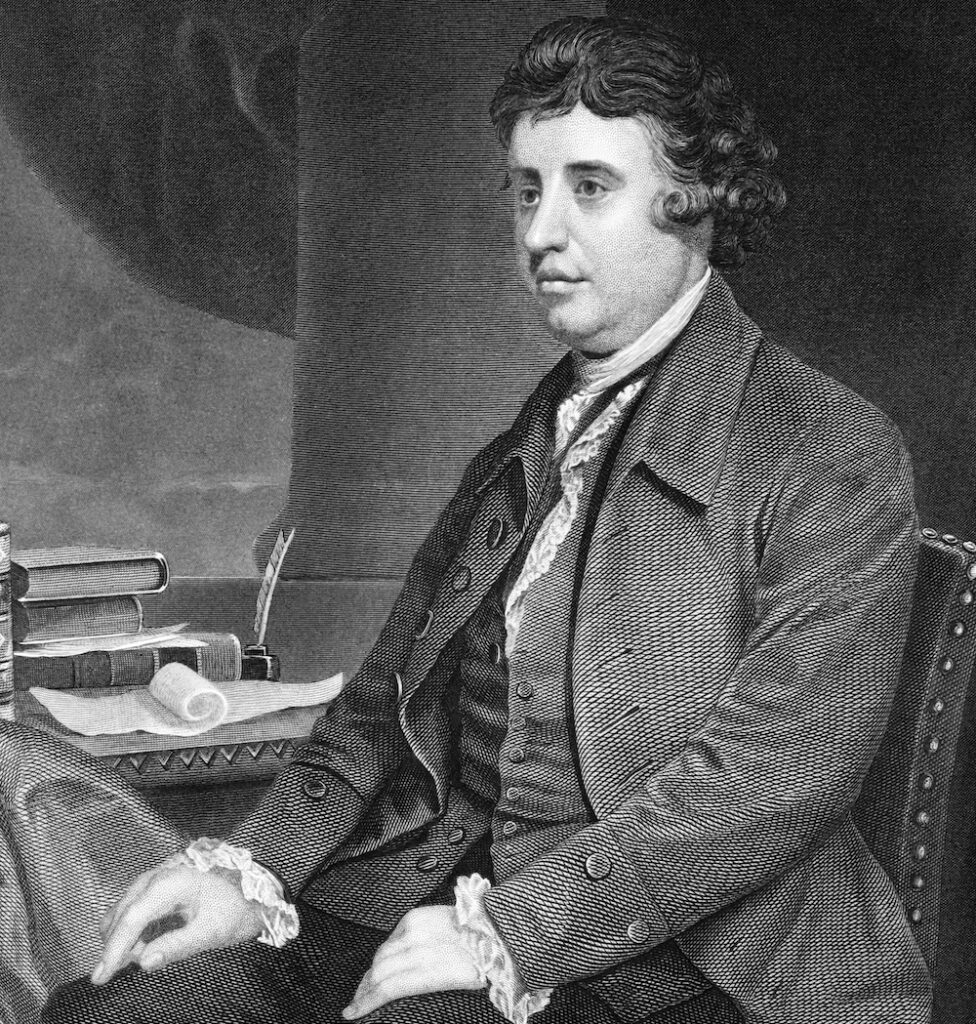
This chapter discusses the input of eighteenth-century Anglo-Irish politician and philosopher Edmund Burke’s views on the role of parliamentary representation in the emergence of political parties from factional parliamentary groups. For example, in the case of Rockingham’s Whigs where Burke, who through his various interests moved increasingly in social, literary, and political circles, was appointed as private secretary in 1765 to the “Marquis of Rockingham, leader of a Whig-faction, [who was asked] to form an administration”, and Burke became an MP for Wendover (Norman, 2013, p.47).
Burke strove for political and moral diligence and “assumed a crucial role within the Rockingham Whigs”, whereby he moved the grouping “away from factional politics and shaped them organisationally and intellectually [perspective] into the prototype of the modern political party” (Norman, 2013, p.56).
Melissa Williams (1996, p.23) provides a critical “reappraisal” of Burke’s “Descriptions and Political Representation”, in which she describes Edmund Burke as the “poster child [of] a distinct strain of multiple personality disorder that afflicted political thinkers” something which proved helpful in the turbulent revolutionary times of the late eighteenth-century Britain.
With Williams’s suggestion on the factors affecting Burke’s personality, his conflicted views were the justifiable result of his diverse circle of friends and acquaintances, such as the lexicographer and ‘devout Tory’ Dr Samuel Johnston where, because of their political differences, their relationship “was never an entirely easy one” (Norman, 2013, p.46) and Whig politicians like “Lord John Cavendish and Buckinghamshire landowner Lord Verney, who formed some of his political relationships, and painter Joshua Reynolds who was one of his artistic-literary friends, with Rockingham, Burke’s patron, his friend until his death in 1782” (Norman, 2013, p.46).
Such influences shaped Burke’s personality giving voice to his pluralist views, arguably a valuable political attribute today. Politicians are often described, in cliché terms, as a different breed which, by nature of habits and human foibles, are convenient recipients of deflected criticism. Thus, it’s a tough, multifaceted job that some people need to do and be damned for. Archard (2013, p.779) notes that “political decision-making ranges over questions that determine the economic, social, physical, and psychological well-being […] of whole populations,” suggesting that multifaceted skills and habits are both a useful and necessary attribute for the political classes, even those seemingly conflicted or pluralist in nature invoking complicity in their decisions yet aware of the necessity of their actions and the all-too-many human shortcomings, to be successful in their political groups (and age).
Burke’s view of the “character of nation and empire and [its] connection to his understanding of political representation,” Williams (2013, p.24) states, turns on the identity of what Burke calls “descriptions” or categories of citizens. She adds in footnote nine that the term “descriptions” approximately refers to “any plurality of persons who may be grouped together based on a shared attribute, interest, or opinion, [as now] to indicate almost any characteristic or attribute by which we might ascribe to a person or group of persons”, which Burke envisages as “identifiable collectives bearing political interests” (Williams, 1996, p.24).
Notwithstanding, Burke’s “functional corporatist” description of citizens as “permanent” economic actors in the workings of a state but more the “underemphasis of Burke’s defence of descriptions, [whether] Irish Catholics or American colonists, whose claims for political representation are at least as strongly grounded in equity and justice as in economic interest and political prudence.” (Williams, 1996, p.25) strengthens the claim of Burke as a statesman with a better and broader vision than the narrow view of national representation held by the Tories, like his fractious friend Dr Johnston (Williams, 1996, p.25).
Here, Williams (1996, p.25) notes the “group structure of society is crucially important in any system of modern representative government, as is clear once we realise that there is no political representation of individuals, but only of aggregates and these communities of interests […] ought to be recognised within the political arena.”
Thus, he shows that “identifiable collectives” or broad-based groupings of elected politicians or their ordinary voting citizens are identifiable in their shared political responsibilities and intentions. A question arises: within these identifiable collectives within a parliamentary democracy, what are the limitations or diminishing factors for the ordinary citizens from their elected representatives that reduce their culpabilities, especially over time after a dramatic event, such as a war, where injustices have occurred? (Williams, 1996, p.25). Chapter three discusses this point with examples from World War Two.
Burke argued that the benefits of political collectives or parties were that they brought “stability to politics”, which allowed “openness and a focus on the national interest”, where notably, “collective principles cannot be kept secret and where agreement on those principles within the parties, and the need to defend them in parliament and in the public domain, create greater honesty in debate and while moderating and controlling government they compete for support from the people and, thus, exert a check on the executive” (Norman, 2013, p.223). Arguably this check is exercised at the ballot box, not procedurally and, more recently, is susceptible to political lobbying and propaganda.
Williams (1996, p.27) notes his cautionary point that “for Burke, good government does not rest on the unreflective preferences or opinions of the people but upon identifying the objective interests of the nation”. Burke (1780, quoted in Williams,1996, p.27) pointed out in a letter to the Duke of Portland that “the crowd” is “naturally proud, tyrannical, and ignorant; bad scholars and worse masters” whose ability to be comprehensive in their collective abilities to decide anything beyond their elective duties is clearly considered doubtful.
Burke (1774, quoted in Norman, 2013, p.225) made an important caveat in his famous “Speech to the Electors of Bristol” that their purpose is not to act as conduits for their constituents because “Parliament is not a congress of ambassadors from different and hostile interests, [instead it] is a deliberative assembly of one nation, with one interest, that of the whole”. Jesse Norman (2013, p.225) adds that “parties are thus groupings of the people’s representatives, not of political delegates acting under instructions from their constituents” and that the “Commons is not a control upon the people but […] a control for the people”.
Burke’s speech (1774, quoted in Norman, 2013, p.225) highlights his ability to hold multiple views simultaneously. As Williams notes above, this is similar to the parliamentary capability to be the national representative assembly where MPs act on their “unbiased opinion, [their] mature judgement, [and] enlightened conscience” to make decisions when these are neither accountable to their constituents nor constrained by the party whips to decide the best course of action for the whole nation.
The process of independent parliamentary decision-making by elected politicians in an assembly, uninfluenced by the demands of their constituents, provides a degree of separation of duties, thus diminishing longer-term responsibilities for the ordinary citizens for actions taken by their government. Chapter three discusses the type and degree of guilt involved and thus culpability with the ‘Question of Guilt’ by Karl Jaspers.
Williams (1996, p.28) notes political theorist Hanna Pitkin and Professor Samuel Beers’ arguments on Burke’s concept of both “actual” and “virtual” representation in “the objective, but also the monolithic and undifferentiated whole of national interest”. However, in footnote 21, Williams (1996, p.29) adds that “Burke’s use of the concept of virtual representation is, on the whole, more critical of the established usage than approving”.
Thus, Beers’ critique of Burke’s “Old Tory” view seems out of place, as does the organic metaphorical reference to John of Salisbury’s Policraticus, which considered the medieval body politic as the prince as the head, the senate forming the heart, the sense organs the judiciary, the hands as the soldiers and clerics and the feet representing the farmers (Williams, 1996, p.29).
Notably, Williams (1996, p.30) points out that the “common interest” is about moving between competing factions and ideas to find “the solution that harmonises them all”, thus making good the common interest. Burke’s functional view of organised groupings wasn’t medieval or seen as divinely ordained, but as mercantile and of its time (industrial age Britain), where his description of such groupings was, “they are broad and few and are primarily economic in their locality and application”. As Pitkin (1967, quoted in Williams, 1996, p.30) puts it, “Burke is concerned about the agricultural interest, not the interests of a particular group of farmers”.
Furthermore, Williams states, “It requires the informed and knowledgeable deliberations of parliament to comprehend the objective interests of Burke’s descriptions and to identify the way in which they fit together to constitute the interest of the nation” (Williams, 1996, p.30).
Critically, any misjudgement or misfunction of the interests or concerns of these broad descriptive groups of citizens quickly “leads to a dysfunction in the workings of the economy giving rise to conflicts between [these] interests, which requires urgent rectification and reconciliation to reduce stress and economic instability” (Williams, 1996, p.31).
Williams (1996, p.31) argues against Beers in footnote 30 that it is for national commercial (and imperial) interests rather than unbiased opinion, considered judgement, and enlightened principles of MPs in Parliament that mark out Burke’s standpoint and less his stance “as a source of new understanding on the place of groups within a system of national representation which rather denudes his contribution”.
However, Williams (1996, p.31) accepts “the amendments [to] the medieval corporatism” critique. He adds that Burke’s views on virtual representation “make a good [deal] of sense” on the issue of his “endless preoccupation” concomitant with American colonialists and Irish Catholics and in contrast to his Tory friends and acquaintances, who saw the colonies as “external to the nation” and its economic interests.
In summary, for Burke, “the role of the [political] representative is to exercise practical wisdom to identify the common good,” where functioning government has independence from the “crown” (and the judiciary), and representatives have a “degree of sympathy” but not “obligations” to their “constituents instructions” (Williams, 1996, p.31). Burke was “optimistic that in a deliberative parliament comprising representatives of this sort” that should overcome and reconcile conflicts of interest among multiple groupings by identifying “a common good” to legislate on the national interest in an unbiased manner where the ordinary citizen may agree or disagree yet remain at a political and legal distance for the passing, authorisation, and implementation of government policy (Williams, 1996, p.31).
As a counterpoint, Archard (2012, p.781) comments that “the democratic public authorises its politicians to act on their behalf”’ and that this “authorisation is both a set of persons and of a class of people”, which so far Burke would concur. However, Archard (2012, p.781) further adds that “politicians are identified as the appropriate source of political acts and yet constrained in what they are permitted to do in the name of those who gave them power so to act”.
This author believes that parliamentary procedures for and constitutional constraints on MP’s actions benefit the nation’s governance and do not require any input or ongoing permission from ordinary citizens once the executive and parliament are formed and sitting. Parliamentary scrutiny is the purpose of HM Opposition. This fulfils Burke’s notion that politicians are not delegates, and that “non-politicians” are not “the true authors of the actions performed by others” by the defining fact of their non-political action in any critical policy decisions of the government or parliamentary approval process; thus, the public does not “own” the actions of its politicians (Archard, 2012, p.781).
The actions of elected politicians, civil servants, government agencies or professional institutions claim that “original source of action” or “authorisation” to fully own their actions (Archard, 2012, p.781). Thus, ordinary citizens have diminished responsibility once the new government is formed, and as argued by this author, lessened complicity in the actions of their government and executive agents, especially after the cessation of injustices. However, the guilt and its consequences remain for those who lived through said injustices.
Archard (2012, p.782) states that his article “argues that there is a moral difference between politicians and their public, […] in respect of the extent [of their involvement…] that leaves a moral residue” in terms of politicians having dirty hands although not in the “degree of responsibility for [the existing] wrongdoing”. This ignores the separation between the public and the political classes or their agents who possess a considerable degree of knowledge and skills not accessible to the public, particularly in military or foreign policy matters.
In conclusion, Williams (1996, p.32) writes that there’s more to Burke than mere commercial interests. Through the issue of virtual representation, whether the defence of Irish Catholics or Americans, he is “passionate” and “more concerned about their justice and equity than about descriptions of economic contribution”.
Regardless of Burke’s beliefs in economic prosperity and the social liberty of its citizens, the national collective is neither a divinely ordained medieval body-politic nor an economic necessity of the “emerging” industrial state (Williams, 1996, p.32), but instead, as Burke regards it “a product of human vision and artifice” and inextricability bound by its various descriptions to citizens who are part of the nation which, as Williams (1996, p.32), notes “is more contractarian than functionalist, grounded in the rational consent, not of individuals but of broad descriptions of citizens represented in an assembled sovereign parliament with policy enacted through its executive”.
Burke’s contractarian stance allows “political representation”, and in terms of his “distinction between actual and virtual representation”, it is acceptable “insofar as groups are actually represented in the sense of being free to elect members to legislative bodies”, which Williams concludes is his contribution to “current thinking” (Williams, 1996, p.43).
To emphasise his point on Burke’s two essential but counterpoised democratic principles, Norman (2013, p.227) states, “The first expresses the democratic principle: that political control ultimately derives from the people’s consent, as renewed at general elections. The second is a constitutional principle: that the popular will should be moderated through institutions which are not tied to the electoral cycle but reflect other views, [interests and values], which permit and encourage collective vision and a long-term perspective and sums up the contrary duality of the national collective that sovereignty in Britain thus resides not in the people, but in Parliament”.
oggle Content
Chapter Three: Jaspers and Guilt, Arendt’s Authority and Living with Complicity
To be complicit, bear responsibility for your actions, and carry your guilt throughout a period of reparations and thereafter is punishment for past injustices that affect how you, your children and your grandchildren live your lives. That was, and for many still is, recognisable to the citizens of post-War Germany who were born during or after the fall of the Nazi party.
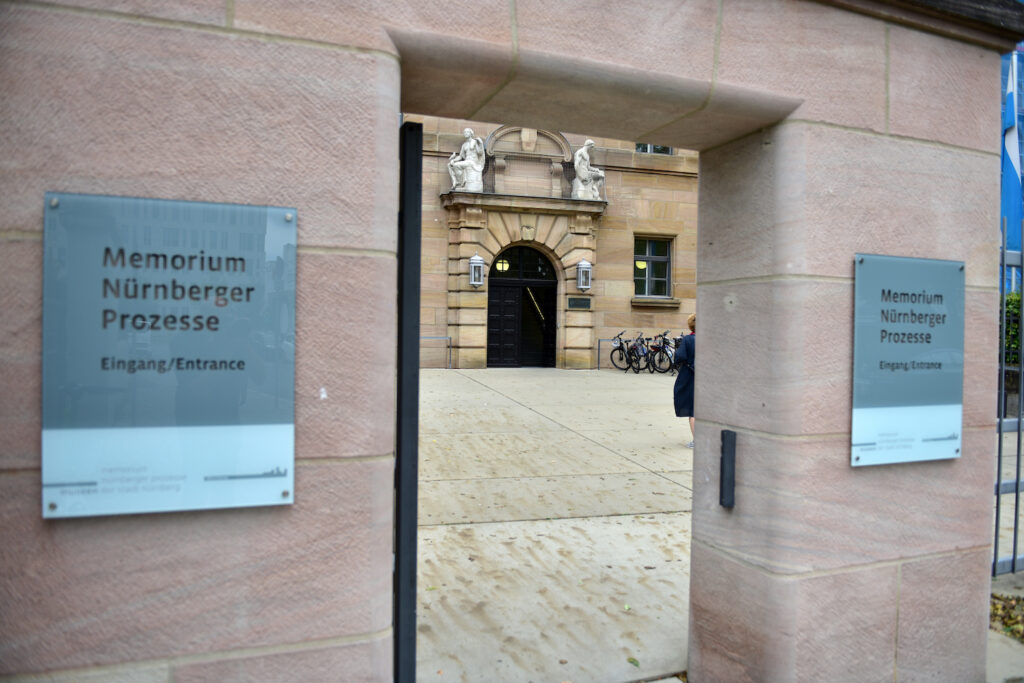
The end of World War Two saw the Nuremberg Trials, led by US, and Allied prosecutors. Leading Nazi politicians such as foreign minister von Ribbentrop, military commanders such as Herman Goring, steel and armaments industrialist Gustav Krupp and architect Albert Speer were tried, found guilty and convicted of war crimes along with many others (Wikipedia, Nuremberg trials, 2022).
With reparations, the Allies initially levied $320 billion in [prepared] claims which still appears unclear, mainly because Allied countries demanded different forms of repayment, which were added to the World War One debt repayments (Gibbs, 2015). The US preferred technology, scientific patents, and personnel, while the British and French took dismantled machinery and manufacturing assets. German forced labour was used to rebuild economies in Europe, North America, and Russia. By 1947 some four million Germans were assumed to have been used in the form of forced labour reparation payments (Wikipedia, War reparations, 2022).
The political ramifications and humanitarian issues that arose were immense. However, the US-sponsored Marshall Plan for financial aid and initiatives designed to help the healing process and rebuild Western European countries after World War Two, including Germany, is still considered highly successful in its goals and implementation.
In such circumstances, German philosopher Karl Jaspers wrote the Question of German Guilt in 1947 to address the guilt associated with the German people and state between 1933-45 and the process of making reparations and healing required during the post-war period. Jaspers (1947, p.25) produced a “Scheme of Distinctions” to distinguish between his “Four Concepts of Guilt”, from which ordinary citizens’ complicity in the actions of their government and leading institutions emerge.
The first is criminal guilt, where these “crimes are acts capable of objective proof and violate unequivocal laws”, in which the Nuremberg trials acted as the “formal proceedings” that can be “relied upon to find the facts and apply the law” to those political, military, and institutional leaders found culpable of criminal guilt and who paid severe penalties for their unjust acts (Jaspers, 1947, p.25).
These culpable informed insiders were from Germany’s political classes and institutional leadership. Ordinary citizens entrusted them to make decisions on their behalf and operate the civil organs of the state, critical industrial production, and infrastructure. The institutions worked with standard procedures, using qualified staff, in hierarchical organisations which had developed in scope and scale since the industrial revolution in the eighteenth century. Chapter four discusses this issue and Foucault’s perspective on training and examination techniques.
The second is political guilt, which involves “the deeds of statesman and of the citizenry of a state, whose power governs me and under whose order I live”, which views the state as sovereign (Jaspers, 1947, p25). Jasper further states that “everybody is co-responsible for the way he is governed”, including a shared commitment to citizenship and distinguishes that authority in making legal decisions and judgements lies with the will and power of the victor in all matters, thus, “success decides” (Jaspers, 1947, p.25).
However, the normative practice of “political prudence” acknowledges and focuses on the obligations of leaders concerning norms, context, and consequences, both national and international, which “serves to mitigate arbitrary power, avoid abuses and seek outcomes that are legitimate and durable” (Jaspers, 1947, p.25).
The third concept of guilt is moral guilt, where an individual is “morally responsible for all [his] deeds, including the execution of political and military orders”, and although criminal acts can be ordered by a political hierarchy “depending on the degree of danger, blackmail, and terrorism, there may be mitigating circumstances [hence] every deed remains subject to moral judgement” (Jaspers, 1947, p.25-6).
The fourth and final concept is metaphysical guilt, explained as “a solidarity existing between human beings that makes each co-responsible for every wrong and every injustice in the world, especially crimes committed in [one’s] presence or with [one’s] knowledge with guilt arising from therein” (Jaspers, 1947, p.26). “Conceptually, it is a guilt not conceivable legally, politically, or morally but as something which weighs upon me as indelible guilt, and this guilt lies in us all with judgement resting with one’s conscience or God alone” (Jaspers, 1947, p.26).
To paraphrase, concerning ordinary adult citizens if you live through it, you do it. You are complicit in your government’s actions to a degree. However, with moral guilt, Jaspers (1947, p.26) added that “jurisdiction rests with my conscience, and in communication with my [close friends and family who intimately share my thoughts and concerns]”, meaning the individual and not the state is the moral arbiter of metaphysical guilt.
For Jaspers (1947, p.26), the “differentiation of four concepts of guilt clarifies the meaning of the charges” with complicity, in terms of ordinary citizens, in the actions of their government. Political guilt is of primary concern in this book, which “for example, does mean the liability of all citizens for the consequences of deeds done by their state, but not of the criminal and the moral guilt of every citizen for crimes committed in the name of the state” (Jaspers, 1947, p.26-7), for example, with German war reparations under the Marshall Plan. However, extending political and moral guilt beyond those who openly supported the Nazi crimes to young children or those born after the war seems unnecessary and unhelpful concerning long-term social healing and rejuvenation.
However, metaphysical guilt was suffered by all. Jaspers (1947, p.27) states, “There remains shame for something that is always present although difficult to realise and quantify as every concept of guilt exhibits realities, the consequences of which appear in the spheres of the other concepts of guilt”. That partly explains Germany’s pacificism and the squeamishness concerning its post-war military until recently.
Jaspers (1947, p.28) claims, “moral failings cause the conditions out of which both crime and political guilt arise” where the drip-drip effect of many acts of “cheap vindication” and the “imperceptible promotion of wrong” make “evil possible” creating the political guilt involved in the unjust events. However, William Ebenstein (1949, p.188) questions whether, within the broader context of “understanding of the complex phenomenon of collective guilt,” within the debate on German culpability, one of its main shortcomings was the style in which the question was expressed, namely, “Are the Germans guilty?” where the answer, either affirmative or negative, was assuredly “bound to be unsatisfactory”.
By dividing the concept of guilt into four categories, Ebenstein (1947, p.188) states Jaspers avoids “this oversimplified approach”, which alternatively “results in an analysis of the conduct and attitude of the German people in terms of different groups according to the degree to which they participated, actively or passively, in the Nazi system of crime and mass murder for over twelve years” and credits Jaspers with this methodological view and “terminological precision”.
To strengthen his point against critics of his approach, Jaspers (1947, quoted in Ebenstein, 1949, p.188) noted that “Germany under the Nazi regime was a prison” where the failure of ordinary citizens concerning their political responsibilities created the “political guilt” of getting into a situation that allowed the injustices to perpetuate during the life of the Nazi regime. However, Jaspers (1947, quoted in Ebenstein, 1949, p.188) stressed, “Once created, a prison break from within was no longer possible”.
Ebenstein (1949, p.188) critiques Jaspers for this line of reasoning, stating there is “some truth to that statement, but it refers to those who blindly obey their government”. Ebenstein cites England, France, and the United States, among others, as counterexamples of countries that “in part, formed their national character by rebelling against established authority”.
Ebenstein’s perspective shapes the claim of citizens suffering political guilt towards being complicit in the unjust actions of the Nazi government. The twelve years of the Nazi regime later required a substantial period of reconfiguration and reparations as a critical part of the healing and rehabilitation process for Germany to change and be forgiven by other nations and survivors.
Since Russia invaded Ukraine in February 2022, the German Chancellor, Scholtz, has broken with the country’s post-war tendency towards pacifism and pledged to boost defence spending by a third in what is described as a radical overhaul of a squeamish and bureaucratised army and allowing the sending of heavy weapons to Ukraine (Economist, 2022). That ended an extended post-war policy of “cautious engagement with Russia” (Solomon, 2022). Russia will likely face charges of crimes against humanity with current evidence of further mass executions of Ukrainians in the so-called special operation of, somewhat ironically, the de-Nazification of Ukraine.
Jaspers (1947, p.28) powerfully states, “The importance of power in human communities where everyone is fated to be enmeshed in the power relations [they] live by the hidden guilt of human existence is best counteracted by supporting the power that achieves what is right, the rights of man”. Thus, supporting human rights includes not making those who come after culpable for the sins of their grandparents.
Jaspers held a view on power comparable with that of renowned German-born American historian and political philosopher Hannah Arendt (1970, p.44) in that it belongs “to a group and [remains] in existence only so long as the group keeps together (potestas in populo), where leadership only sustains itself through this empowerment and once this dissipates the leaders’ power also vanishes”. For this book, the progenitor of complicity rests within the group’s collective power.
Arendt (1970, p.45) sees authority as an elusive “phenomenon of physical or social movements” which can be vested in persons such as teachers and pupils or offices such as the Roman senate, modern House of Lords or the hierarchical offices of the Church, the military, or a large corporation. Thus, power and its authority are vested in the hierarchical structures of the polity.
Whether authority flows from Bishop, Brigadier, or Boss, a regime’s hallmark is its unquestioned recognition by those who are asked to obey, neither coercion nor persuasion is needed as the regiments of discipline, indoctrination, and training are sufficient. In Arendt’s (1970, p.45) example, even a drunk ‘priest can grant valid absolution’ with social conditions and financial constraints also playing their part. This continual acceptance of authority in a democracy helps maintain the organisational hierarchy, whether through respect for superiors or fear of reprimand until the individual or governing regime becomes incompetent or fails.
This hierarchical shaping of authority through the democratic process can diminish or remove direct and overlapping responsibilities from voters to politicians and their agents. That diminishes the complicity of ordinary citizens in the decision-making process, thus, in the culpability of injustices arising from government actions. Complicity concerning political and moral guilt, as Jaspers (1947, p.30) mentioned, remained for citizens involved, to varying degrees during the period of injustice, with criminal guilt met with punishment and liability for political guilt with all necessary reparations and the “loss or restriction of political power or rights”, such as economic or military prohibitions imposed by the victor as justice.
Arendt (1970, p.44) notes that “force, especially if violent, serves as a means of coercion, […] and indicates the energy released by physical or social movements.” Jaspers (1947, p.31) adds, “Where a state serves to control this force as law enforcement within, [or] as war without, the winner decides the fate of the defeated, through suffering, mercy, or magnanimity, and has the power to let live and avoid their destruction”.
Jaspers (1947, p.33), in terms of charges of guilt brought by others or by conscience, states, “They are raised with the intention of effecting punishment and holding [perpetrators] liable. Their validity is legal and political, neither moral nor metaphysical”. He raises the question, “In which sense can a group be judged?”. Jaspers (1947, p34) claims, “For crimes, one can only punish an individual, whether he was acting alone or in concert with accomplices. It is nonsensical, however, to charge a whole people with a crime. The criminal is always only an individual. He has the same opinion concerning laying “moral guilt on a people as a whole” because “national character” does not encompass everybody, and differences persist in opinion and behaviour (Jaspers, 1947, p. 34). This suggests a broad plurality of views with different degrees of intent and participation.
Judging a nation’s people as all the same falls into the fallacy of composition (Jaspers 1947, p.35). Jaspers claims, “All lines that we may draw to define [a nation] are crossed by facts […]; these do not coincide but are overlapping. A whole people can be neither guilty nor innocent, neither criminally nor morally responsible in the political sense where only the citizenry of a state is liable. The categorical judgment of a people is always unjust” (Jaspers, 1947, p.35).
Jaspers uses a biblical example to illustrate his point concerning opinions that condemn people collectively. Holding the Jewish people guilty for the crucifixion because Jewish actions in cooperation with the Romans led to the execution of Jesus is an “error is so simple and evident” (Jaspers, 1947, p.36). He claims that “there can be no collective guilt of a people or a group within a people, except for political liability. To pronounce a group criminally, morally, or metaphysically guilty is an error akin to the laziness and arrogance of average uncritical thinking and whoever judges must expose their source of authority as proof of their moral justification” (Jaspers, 1947, p.36).
Finally, Jaspers (1947, p.37) adds, “Political liability is gradated according to the degree of participation although this is determined by the victor who forces all who wish to survive the disaster to submit.” In the case of the Marshall Plan after World War Two, this was the accepted situation.
Gilbert (2002, p.115) states, “There is a collective that intends to do something, if and only if, the members of a given population are jointly committed to intend as a body to do that thing” and notably, “an account of collective guilt in terms of membership guilt feelings is found wanting”.
le Content
A German friend of the author, born in 1968, was asked during a conversation with the author in June 2001 what her grandparents did during World War Two. She replied that they attended the Nazi party rallies at Nuremberg and that her grandfather was a decorated Nazi spy who operated covertly in Iceland. She added in an anguished tone, “Why do I have to keep apologising for the mistakes of my grandparents?”
Wishing to avoid the Basil Faulty response (“you started it”) because it was apparent the anguish this issue caused her, the conversation turned to how exactly did she and her generation jointly commit themselves to the mistakes of her grandparents. There was no question of her disagreeing with the paying of reparations for those who lived through this period or the unfaltering need to make amends in compliance with the Marshall Plan.
Jaspers states that metaphysical guilt weighs on people’s consciences and affects those who experienced the aftermath of wartime injustices and those of later generations. As a result, the psyche of the Germans has changed, with younger generations unable and unwilling to engage in or sponsor foreign military operations until the Russian invasion of Ukraine in 2022.
He believes that we need to remain attentive to political changes within populations of specific behavioural characteristics, which, if they re-emerge, can lead to governments taking similar actions that can lead to war and injustices. Such comments make the events in Ukraine even more concerning as we discover atrocities during the ebb and flow of Russian and Ukrainian front-line positions.
It seems reasonable to state that the view espoused by Gilbert appears overly strong and that complicity with past government actions requires an endpoint to whom the culpability/blame is applicable so that future citizens are not also victims by bearing the guilt of previous generations. That allows healing and harmony to return to human relations, without which society lives with festering resentment such as that cultivated in Russia over the last 20 years under Putin’s regime.
Chapter Four: Ascribing Accountability, Ordinary Citizens and Ordinary Shareholders, Syrian Complicity, and Examination of Power
Margaret Gilbert (2002, p.116) proposes that “nations, families, firms or other such groups are often accused of wrongdoing.” These are either informal or formal accusations involving criminal charges, court proceedings and demands for compensation where “apologies are sought, not from individuals, but from the groups themselves” (Gilbert, 2002, p.116). Concerning Kutz’s observation, Gilbert states that “political life and legal life would be unintelligible and unrecognisable without such holistic talk of groups, and without holistic systems of accountability” (Gilbert, 2002, p.116).
Wherein Kutz (2000, p.192) recognises the ubiquity of ascriptions to collective accountability of groups, he continues, “the law of complicity and conspiracy in effect applies an organicist concept of collective action, treating the jointly acting group as conceptually prior to its individual members” in effect regarding the group, itself “as the culpable party.” (Kutz, 2000, p.192). This attributes accountability of the group to each of the group’s members, which he notes “reifies the joint intention, or commitment, that underlies all concerted action, treating it as a thing […] rather than an overlap among individual participatory intentions” (Kutz, 2000, p.236). He adds that “once a mental state is attributable to a group, so too is an action, and then the criteria for criminal responsibility are satisfied’ (Kutz, 2000, p.236).
Accepting group ascriptions to culpability has a point in certain situations. Kutz (2000, p.196) thinks “there is an important difference between expressing recrimination at an organisation and expressing it at an individual […] a collective cannot respond affectively to these expressions, only its constituent members can.” This response is usually emotional through “shame and guilt”, which registers the harm caused, or with denial and resentment as leading Nazis did concerning their war crimes (Kutz, 2000, p.196). Thus, collectives can lack an affective, emotional response to accountability, which counteracts the expression of recrimination.
Gilbert (2002, p.117) poses that Kutz is undoubtedly not the only philosopher who would endorse the claim that a “collective cannot respond affectively, only its members can” and states her intention to “counter that claim”. Gilbert (2002, p.117) explores “the circumstances in which ascriptions of guilt feelings to groups are judged to be in place”. She notes, “If groups cannot have pangs of guilt, they cannot have guilt feelings”. Gilbert (2002, p.122) continues, “people frequently ascribe [collective moral] responsibility to collectives” and cites US wartime President Roosevelt applying such criticism to the German people.
Thus, she disagrees with Kutz’s “collective intention” as an “overlap among the intentions of individuals” and treats it as a thing in itself. Gilbert believes the group or collective can be taken “as having intentions of its own” (Gilbert, 2002, p.122-3).
She further states collective intentions as: “Population P has a collective intention to do A, if and only if, the members of P are jointly committed to intending as a body to do A with the key term being joint commitment as compared to a personal commitment by an individual to do something” (Gilbert, 2002, p.125). This joint commitment, whether a small or a large group, must “openly express their readiness to be jointly committed with others of the relevant type,” and by acting in this way, “relevant members of P acted so as to satisfy this intention” (Gilbert,2002, p.127).
Gilbert (2002, p.127) notes that their complicity in the resultant activities is where group members can say, “We did it”. Although that suffices for a group’s joint commitment, it seems doubtful for an entire population’s expressed readiness to commit, especially if some were children or hadn’t yet been born.
According to Gilbert (2002, p.116), where Kutz expresses opposition over treating [the group itself] as the culpable party, he also writes that “it is difficult to connect individual agency with the collective harm. Only the collective is left to be blamed”. Thus, with the “focus primarily on the collective rather than upon individual agents, some degree of misfire is inevitable, resulting in individuals avoiding culpability, affecting the efficacy of the charges, which compromises the citizens’ group complicity in its joint commitment with government and institutionally unjustifiable actions” (Kutz, 2000, p.192 & 196).
To counter such outcomes, Gilbert (2002, p.137) appeals to ‘”feeling membership guilt” as an account of “collective feelings of guilt that does not appeal to feelings of personal guilt, but rather to something which has the action of the collective as its object.” Concerning his types of guilt, Gilbert cites Jaspers (1947, quoted in Gilbert, 2002, p.134), who feels “co-responsible for what Germans do and have done”, where Jaspers felt a kinship with those of a similar mindset and distance from those who denied it.
Thus, for “Germans to feel as [Jaspers] does,” as Gilbert (2002, p.137) states, for their actions, Jaspers has a philosophical dilemma in denying the intelligibility of feelings of membership guilt. She adds for Jaspers “to feel guilt over acts in which he was not directly involved, and so on, is simply irrational,” stating that “against this concern”, she makes her case (Gilbert, 2002, p.137).
Larry May (2002, p.31) reviews Kutz’s book stating “the cornerstone of [his] analysis is the idea that individuals should be responsible for what they participate in, regardless of whether the participation makes a causal difference for the outcome” and praises him for bearing on “two truly thorny problems”, the criminal law of conspiracy which regards each conspirator as responsible for what any member of the [group] did while pursuing the intentions of the group and the civil law that limits the tort liability of shareholders of corporations.
May (2002, p.331) writes that Kutz says “these doctrines are both too extreme” and that moderation, “in line with his analysis of participatory intent”, especially on complicity, is needed to bring these two thorny problems concerning collective harm back into alignment. The Lafarge-Holcim example below demonstrates such alignment with his complicity principle.
Although Kutz concludes that through participation, moral accountability is broadly construed to include unstructured harms, he pushes for legal and moral accountability (May,2002, p.332). May finds fault in Kutz’s scope of application as loss of liberty or property seems too extreme a reaction to the complicity of individuals in unstructured harms (May 2002, p.332). For example, in the case of an audience member fined for simply buying a ticket to an illegal jazz performance where the purchaser is deemed complicit by encouraging the performer, to which May (2002, p.332) thinks the element of intent is crucially missing.
Kutz (2000, p.246) argues that shareholders are like ordinary citizens in that “in a mass tort context where investors, including beneficial nominees in mutual funds, who purchase shares in corporations […] have control over their exposure to the risk that the enterprise’s activities will go awry. However, their intentional participation in the collective endeavour does not make them blameworthy. They have done nothing wrong by purchasing stock, nor have they failed in any way as a shareholder. Yet, it does render them accountable in the domain of repair for the company’s accidents when the company cannot meet its warrantied claims” (Kutz, 2000, p.246).
This can mean losing your entire equity investment or participating in a deeply discounted funding round. Notably, on completion of an initial public offering, equity bought later on the open market is not part of a company’s capital. Assuming ordinary shareholders are personally accountable for the risk of the company’s activities seems an extreme position. May (2002, p.332) adds that “unless they have participated intentionally in a harm, […] it is not enough that they participated in the activity of forming or sustaining the company”. He states that “the senior management and directors who have usually participated in the intentionality of those harms should, therefore, be the focus of individual accountability in the corporate domain” (May 2002, p.333).
This charge also befalls senior managers in government agencies, the military, and leading institutions. The separation of citizens’ duties or minimal rights of nominee investors is vast compared to the power exercised by the governmental or corporate executive. The control lies with the executive, and the moral accountability dwells there, not in the actions of ordinary citizens via the Complicity Principle.
Gilbert (2003, p.236) praises Kutz’s “stylish” book in her review concerning the “accountability of individuals who participate in collective wrongdoing.” Gilbert (2003, p.236) notes that central to Kutz’s account is the notion of participatory intention. This, Kutz (2000, p.81) states, is “an intention to do my part in a collective act, where my part is defined as the task I ought to perform if we are to [successfully attain] a shared goal”. Gilbert (2003, p.237) critiques Kutz’s response to collective action as, at minimum, relying on knowing each other’s intentions to achieve the appropriate outcome.
Kutz (2000, p.205) criticises the criminal law of conspiracy, suggesting that accomplices deserve less punishment than principles. This is similar to the idea above, where dissenting politicians are less culpable for injustices than the executive. Meanwhile, it contrasts with the civil law of shareholder liability, which accepts no liability for shareholders (Gilbert, 2003, p.238).
However, Gilbert (2003, p.238) notes Kutz’s point that shareholders may not be blameworthy but have reparative duties to their company’s victims. Albeit, unless they become substantial investors, by the act of their investment, often indirectly, they bear no part in the company’s control. Notably, Gilbert (2003, p.238) concedes that with shareholder liability, “one can agree with the humane suggestion that the law takes a nuanced approach to the individuals involved”. Kutz (2000, p.253) concludes, “So long as that liability is sensitive to the individual differences in the scale and scope of participation, the error lies in distinguishing the group from each member over their participation”.
Gilbert (2003, p.238) has reservations about Kutz’s proposals for collective actions. She describes relations between parties as dancing the tango of close involvement. Kutz stumbles over the “appropriate special standing” for the parties involved or “narrow collective action”. [clearly] Kutz’s examples are a plus where “one would expect it to provide a basis for distinctive judgments of accountability”.
In conclusion, Gilbert (2003, p.238) states, “It is not clear, […] that those with overlapping participatory intentions in Kutz’s sense are appropriately considered accountable for what we do together as opposed to what they individually do”. Gilbert (2003, p.239) proposes a different theoretical framework to comprehend “both a narrower collective action and a sense of accountability for what we are doing or have done”. Her use of tenses and “We” in this comprehensive approach form part of this author’s conclusion as to whether collective intention and participation make ordinary citizens complicit.
After five years of legal struggle, the French Court of Appeal upheld charges of complicity in crimes against humanity against Lafarge, a cement production company renamed Holcim Group after the 2015 merger with Swiss Holcim, that continued operating cement plants in Syria for more than three years after the outbreak of the civil war in 2011 (Quinio, 2022).
The court also upheld charges of “endangerment of the lives of others” after the company’s Syrian subsidiary transferred funds to several armed groups, including ISIS (Quinio, 2022). That resonates with Kutz and Gilbert’s positions for legal accountability as Lafarge [is] a legal entity rather than just its executives, [which] underscores the difficulty faced by companies in war zones whether to continue or close commercial operations. Its senior management was charged separately with financing terrorism and endangering life (Quinio, 2022).
In response, the industrial behemoth plans an appeal in the French Supreme Court as it claims former employees had all left the company and denied complicity through commercial links with militant groups in the area (Quinio, 2022). Plaintiff, Claire Tixiere of the European Centre for Constitutional and Human Rights, added, “When grave crimes are being committed, it’s not just the political and military leaders that need to be held to account but also the economic actors” (Quinio, 2022). These charges and convictions echo actions against industrial groups, like Krupp, in the Nuremberg Trials mentioned above.
As May and Kutz mention regarding legal accountability and not being blameworthy by purchasing shares holding ordinary shareholders, especially indirect nominee shareholders, individual complicity is an extreme position concerning their culpability for collective reparations. These include using company cash reserves and access to credit and insurance provisions to manage any decline in profits or investment value. The situation of shareholders bears comparison to ordinary citizens and their complicity in the activities of their political and military leaders. As discussed, the complicity of ordinary citizens (or minority shareholders) is vastly less than political and institutional leaders in terms of culpability for injustices due to their limited knowledge and activities.
Hierarchical structures are controlled and maintained through examination processes to qualify for entering professions and leading institutions or the selection processes for entering political office.
Michel Foucault (1975, p.184) states “that examination combines the techniques of an observing hierarchy and those of a normalising judgment” and continues, “it establishes over individuals a visibility through which one differentiates [people] and judges them. That is why in all the mechanisms of discipline, examinations are highly ritualised”. He continues, “The examination is a documentary technique that determines the individual who has to be trained or corrected, classified, normalised, excluded, etc.” (Foucault,1975, p.191).
Thus, through many standards and procedures, candidates are prepared and moulded for the professions and higher offices from classroom to the courtroom, junior partner to boardroom, or ministerial offices. Individuals are shaped by group conditions and stipulations where people adapt and accept the required conventions and imposed disciplines if they wish to progress. Parliamentarians may still have maverick qualities, which likely means they will remain firmly on the backbenches, not in the executive. Power, as Foucault claims, is not held in the interests of a particular group but spread throughout the professional classes.
From the late seventeenth century, discipline techniques developed in diverse institutions such as prisons, hospitals, the military, schools, and colleges. For example, in Britain, with a sovereign parliament, civil service, and a constitutional monarchy, the professional and officer class grew to maintain order and regulate an expanding economy, empire and military.
This extended professional development process has continued until the present. An examination is central in regulating those judged sufficiently meritorious and excluding those who do not fit the criteria to become professionals or officers. Knowledge and power relations create a race for status and advancement, with education and professional qualifications as factors. This situation fosters a lack of opportunities to participate in civil or professional procedures for ordinary citizens within a democracy. This systematic detachment and lack of participation or knowledge in national decision-making should count as a factor for ordinary citizens having diminished complicity in the actions of their government and leading institutions.


Conclusion
When discussing complicity, terms such as responsible, accountable, and culpable are interconnected and convey structure, purpose and meaning throughout this book. Citizens are responsible for their actions, accountable to others for judgment, culpable and thus punishable for their crimes, and therefore complicit by knowingly and intentionally participating as broadly outlined in the introduction.
Thompson (2006, p.167) writes that “making a democracy work is less about holding periodic elections and more about upholding a system in which citizens can act collectively to protect common goods and to ensure justice is done”. However, he qualifies this position by adding, “Citizens have different ideas about common goods and justice, and political debate is often about what these things mean”, thus signifying that the debate must extend well beyond the complicity of ordinary citizens in this book to form any abiding conclusion or legal humanitarian dictate.
Furthermore, in functioning democracies, effective political debates take place through parliamentary representatives to produce legislation. Ordinary citizens’ political participation is over after they vote based on the election manifesto pledges by constituency candidates. After that, citizens have limited recourse to intervene in parliamentary processes, except by writing to their representative or voicing their disapproval by demonstration, until the next election. Elected politicians decide on legislation, and the executive enacts policy. There is a separation in knowledge, intentions and participation between ordinary citizens and their elected representatives and institutional officers.
The above is the weaker argument for citizens not being culpable for the actions of their government and leading institutions. However, it still makes a significant distinction. The stronger argument for citizens not being complicit in their government’s actions stands against Gilbert’s claim of collective group participation and those actions where she has “no doubt that [those] citizens had generally committed themselves” even “if the wrongful action occurred before [they] were born” (Thompson, 2006, p160).
Kutz (2000, p.144) claims participation entails implication using the “broad but thin analysis of collective action” where individual agents have “overlapping participatory intentions”. However, he does not consider access to knowledge and limitations to decision-making or the passage of time in which complicity applies to all ordinary citizens.
The degree of complicity suggested by Gilbert does not extend to infants or those born after the cessation of the injustices. As Jaspers states in his fourth concept of guilt (metaphysical), which transfers to the minds of future generations who were not alive to participate in the injustices yet still bear the psychological punishment. That, itself, seems a further injustice, albeit to different victims. Therefore, it’s wrongful because of its perpetual implementation.
More pluralist and progressive approaches towards the types of guilt conceptualised by Jaspers, and the degree of accountability and complicity of ordinary citizens held by Kutz, are more applicable to a whole population. That contrasts with Gilbert’s assertion of complicity for all time for all people who happened to be born later into the same collective group or nation. This author has taken a more open and broader interpretation of certain post-injustice circumstances.
Foucault (1975, p.191) states, “it is the individual who has to be trained or corrected through visible and documentary examination techniques which are highly ritualised in form, generating a modern education and training system”. That produces, within an expanding economy, evermore professional experts in ever narrower fields of knowledge and expertise who can readily define their individual or group responsibility. However, it also creates no particular focus or group collective controls with power diffused throughout the economy and governmental agencies.
Thus, by diffusion or deflection of wrongdoing and injustices, those responsible, whether political or professional leaders, can plausibly deny their accountability concerning the true extent of their participation in wrong-doings and injustices. Therefore, a misapplication of culpability and respective implementation of reparations can be applied to the less deserving ordinary citizens. That can be referred to as the Problem of Appropriate Accountability, where culpability and complicity are retrospectively applied to non-participatory citizens or those substantially removed from knowledge or effective power over events.
In the Nuremberg Trials, discussed in chapter three and the successful implementation of the Marshal Plan it was more the exception than the rule in applying reparations. There is an analogy between the desire for Russian reparations desired by the West now and German reparations after World War One and the bitter resentment over the war-guilt provision of the Treaty of Versailles. Rightly or wrongly, Russians now, [as Germans then], do not see themselves as solely responsible for the war (Eichengreen, 2022). There is a wish for future Russian governments to respect international norms. Invoking those norms to extract every pound of flesh will not make achieving this more likely (Eichengreen,2022). That points to the coming practical difficulties for the judgment of collective guilt over a whole nation which could remain tangible for the rest of the century.
Never-ending blame hanging over citizens for past injustices is not the optimal solution to rectifying injustices. It is better to enable and empower younger generations to live in peace, harmony, and prosperity of the sort perpetuated in Europe from 1945-2022. As for ongoing injustices, the victor will decide. That decision will neither be easy to implement nor is it obvious to foresee.
Malcolm
James
Crawford MA Philosophy
Submission Date – 29 Sept 2022
References and Bibliography
Archard,
D. (2013) ‘Dirty hands and the Complicity of the Democratic Public’, Ethical Theory and Moral Practice, vol. 16, no. 4, pp. 777–90. [Online] available at: https://link.gale.com/apps/doc/A343054805/AONE?u=tou&sid=bookmark-AONE&xid=190efa9a (Website accessed 16 Jun 2022)
Arendt,
H. (1970) ‘On Violence’ New York: Harcourt Inc
Gibbs,
A. (2015) ‘Who Still Owes What for the Two World Wars’ CNBC Explains, 2022, CNBC LLC. [Online] Available at: Who still owes what for the two World Wars? (cnbc.com) (website accessed 9 Aug 2022)
Ebenstein,
W. (1949) ‘Review of The Question of German Guilt,’ by K. Jaspers & E. B. Ashton, The Annals of the American Academy of Political and Social Science 261 (1949): 187–88, Sage Publications Inc. [Online] Available at: http://www.jstor.org/stable/1027513 (website accessed 10 Jun 2022).
Economist, (2022) ‘Leaders: The new Germany: Thanks to Vladimir Putin, Europe’s Most Important Country Has Woken Up’, The Economist Newsbook Limited 2022, (ed)13th-19th August. [Online] Available At: Thanks to Vladimir Putin, Germany has woken up | The Economist (website accessed 17 Aug 2022)
Foucault,
M (1975) ‘Discipline and Punish: The Birth of the Prison’ (Tr.) A. Sheridan, London: Penguin Books
Gilbert,
M. (2003) ‘Review of Complicity: Ethics and Law for a Collective Age, by C. Kutz. Philosophy and Phenomenological Research, 67(1), 236–239. JSTOR [Online] Available at: http://www.jstor.org/stable/20140595 (Website accessed 8th June 2022)
Gilbert,
M. (2006) ‘A Theory of Political Obligation: Membership, Commitment, and the Bonds of Society,’ Chapter 7: Joint Commitment and Obligation, Oxford 2006, Online (ed) Oxford Academic 2006 Available at: Joint Commitment and Obligation | A Theory of Political Obligation: Membership, Commitment, and the Bonds of Society | Oxford Academic (oup.com) (website accessed 15 May 2022)
Gilbert,
M. (2002) ‘Collective Guilt and Collective Guilt Feelings’, The Journal of Ethics, vol. 6, no. 2, 2002, pp. 115–43. JSTOR [Online] Available at: http://www.jstor.org/stable/25115721 (Website accessed 30 May 2022)
Eichengreen,
B. (2022), ‘Should Russia Pay Reparations for the Ukraine War?’ by Barry Eichengreen, Guardian News and Media Ltd,13th June 2022. [Online] Available At: Should Russia pay reparations for the Ukraine war? | Barry Eichengreen | The Guardian (website accessed 15th June 2022)
Jaspers,
K. (1947) ‘The Question of German Quilt’, (tr.) E.B Ashton, New York 2000: Fordham University Press. [Online] Available at: ProQuest Ebook Central – Reader (website accessed 16 Jun 2022)
Kutz,
C. (2000) ‘Complicity: Ethics and Law for a Collective Age’ Edinburgh University: Cambridge University Press.
Matravers,
D. (2022) ‘Study Skills Week 22: Discussion with Cristina Chimisso,’ [Online] Available at: Study week: 3. Discussion with Cristina Chimisso (open.ac.uk) (website accessed 9 Jun 2022)
Matravers,
D. (2022), ‘Study Skills Week 29: 2. Who is Responsible? Who is Complicit?’ [Online] Available at: Study week: 2. ‘Who is responsible? Who is complicit?’ (open.ac.uk) (website accessed 8 May 2022).
May,
L.
(2002) ‘Christopher Kutz, Complicity: Ethics and Law for a Collective Age’, The Philosophical Review, 111(3), [Online] Available at: https://link.gale.com/apps/doc/A111027340/AONE?u=tou&sid=bookmark-AONE&xid=90cc2cdf or Christopher Kutz, Complicity: Ethics and Law for a Collective Age – Document – Gale Academic OneFile (open.ac.uk) (website accessed 10 Jun 2022)
Norman,
J. (2013) ‘Edmund Burke: Philosopher, Politician, Prophet’ London: Williams Collins.
Quinio,
A (2022) ‘French Court Upholds Charges Against Lafarge Over Activities in Syria’, The Financial Times Ltd 2022. [Online] Available at: French court upholds charges against Lafarge over activities in Syria | Financial Times (ft.com) (website accessed 18 May 2022).
Solomon,
E,
(2022) ‘Germany Unveils’ New Era’ in Defence Policy with Big Military Spending Jump’, The Financial Times Ltd 2022. [Online] Available at Germany unveils ‘new era’ in defence policy with big military spending jump | Financial Times (ft.com) (Website accessed 13 Aug 2022).
Thompson,
J. (2006) ‘Political Complicity: Democracy and Shared Responsibility’, in Primoratz, I. (ed.) Politics and Morality, London: Palgrave Macmillan pp. 153–69. [Online] Available at: ProQuest Ebook Central – Reader (website accessed 9 Jun 2022).
Wikipedia,
(2022) ‘Nuremberg Trials’. [Online] Available at: Nuremberg trials – Wikipedia (website accessed 9 Aug 2022)
Wikipedia, (2022) ‘War Reparations’. [Online] Available at: War reparations – Wikipedia (website accessed 9 Aug 2022)
Williams,
M. (1996) ‘Burkean Descriptions and Political Representation: A Reappraisal, Canadian Journal of Political Science / Revue Canadienne de Science Politique 29, no. 1, pp. 23–45. [Online] available at: http://www.jstor.org/stable/3232206 or Burkean “Descriptions” and Political Representation: A Reappraisal on JSTOR (website accessed 8 May 2022)

Recent articles


