
Please read the first part of the blog here.
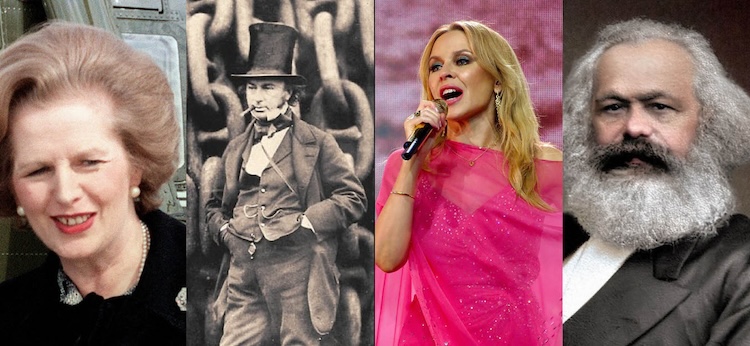
It seems that from older cultural perspective old habits persist for reasons of cultural belonging and a sense of home. While with the expression of group identity via social media or the achievement of a university degree where not only individual grades but the institutes place in the hierarchical research-based league table effects ones’ employment prospects and credibility on the professional career ladder. Thus, certainly since the 1980s an intellectual based rather than physically based on working practices social system has emerged alongside the industrial-based one.
Social identity is still about place and a sense of belonging, just whether it is a sense of belonging to academic, professional, and political institutions or more tangible, physical local communities.
Notwithstanding, people’s deep-rooted sense of identity and belonging. Culture is still subject to change from ideas, influences, and manipulation not only by those wishing to orchestrate significant political change but through causal events and the passage of time. In addition to modern technologies and changing working practices other factors which significantly alter social conditions and lived experiences are travel or migration, health, education, and increasingly entertainment due to leisure, underemployment, and consumerism.
Nuanced Social classes

Social classes have become far more nuanced and fluid in liberal democracies over the last 40 years with the rise of advanced technologies and sustained governmental drives towards higher education attainment and institutional representation in the professions. A degree of confusion over tradition social-class definitions has been evident since the 1980s with the expansion of home ownership (an example is the ability to buy your council house) or the decline in heavy industry jobs with an increase in office-based employment. Is a clerk in a bank or insurance office a middle- or working-class job? Who earns more an electrician or a bank manager?
Intra-class struggle has emerged, especially in higher professional classes, over the size of bonuses and availability of travel benefits between private or public sector executives. Conflicts of interest have arisen between politicians and their constituents over issues such as immigration and adherence to the party whips (chiefs) direction over party policies or the wishes of political donors and their ideology.
One can argue that Karl Marx had it easy describing the upper classes as the bourgeoise and the working class as the proletariat in the mid-19th century. However, his version of the petit bourgeoisie requires a fundamental review to assess what is really happening within the dominant social class within modern advanced economies.
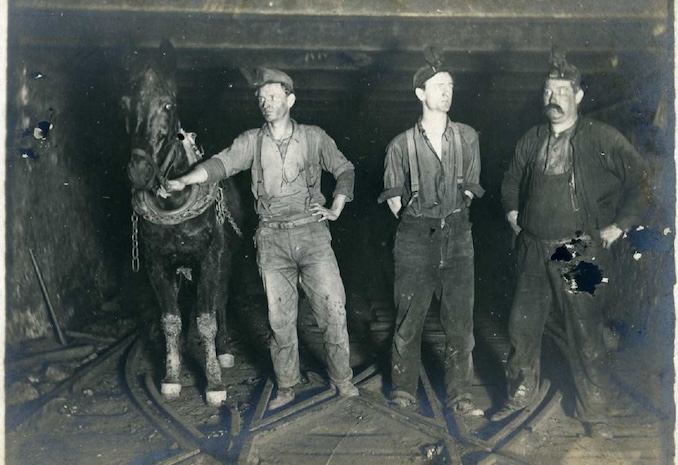
Not only who, when and how someone attains their social-status but what that means needs some clarity to understand where you belong in the modern world- the old phrase of Britain as a nation of shop keepers (often attributed to Napoleon) or latterly office-based workers is less relevant than even 30 years ago.
In these circumstance people’s political representatives need to properly recognise and respond to the needs of country both local and nationally where people retain a sense of belonging to their community still steeped in long-established customs and traditions, and the changed circumstances they find themselves in an advanced economy. Politicians and self-proclaimed pundits or influencers should provide a revitalised sense of grounded identity as it would count for more than insular atomised presence on social-media platforms.
Furthermore, agreement over who holds the right to decided what is or who is acceptable over what is not or who is not acceptable needs the widespread support of the general population based on the prevailing culture of the country at large. That produces democratic consent. Anything that falls short of such consent breaks the common laws, customs and traditions built over centuries through the ages described above. This is a phenomenon that applies to most sovereign parliamentary countries.
This will feature in future cultural blogs on Little Deal Clincher shortly.
Bent and twisted Social class structure
To conclude this brief history highlighting familiar customs from agrarian times-the industrial age- and into the advanced technology society of today. The social class structure has bent and twisted to suit the ravages of time and nature, and the incessant wants and inventions of humanity.
Notably, over time the language and phrases people use alters or falls-out-of-use causing once familiar cliches sound antiquated or retain little purpose. For example, no news is good news belongs to a wartime era or a dangerous industrial setting, such as a deep coalmine or ironworks.
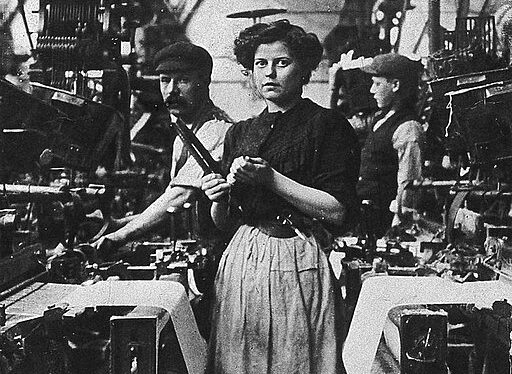
In the18th century Romantic poet Willaim Blake’s descriptive reference to the dark satanic mills or over-crowded machine filled factories, is a quite different world from someone on holiday on a Greek Island exasperated by the office contacting them via the latest I-phone to ask a work-related question.
Therefore, unless the flight crashes on the way home the overstressed office worker’s harassment is short lived. Where-previously in the world described by Blake above a knock on the door from the factory supervisor telling of a fatal accident ensured ongoing misery for the dead worker’s family. It shows that improvements in working conditions and life-expectancy influence living culture expressed both verbally and physically.
Thus, over time life for all classes of people has improved, markedly.
Lastly, an old Scottish phrase of ‘old clothes and porridge’ suggested a return to manual labour after a break is another fading-phrase as manual labour makes up a smaller percentage of the working population than it did, caused by automation, globalisation, and de-industrialisation from the 1960s onwards certainly in the developed nations. The phrase suggests stodgy food to fill the belly, keep someone warm and allow their older clothing to get heavily soiled from their working practices.
Therefore, one can ask if the phrase ‘rush hour’ will begin to fade from collective expression if working from home remains popular with once commuting workers. With the introduction of low emission zones in transport systems and the eventual widespread use of electric vehicles. It is possible that the hum and din of traffic jams could fade to obscurity like the old agrarian sights and sounds of centuries past. Or will old habits hold fast, and people’s familiar preferences remain?
LDC May 2024
Further Information, references, and suggested reading –
BBC News Service, (2021), ‘Bourton-on-the-Water Crowds Enjoy River Football Match’ BBC News London, UK. Available Online At: Bourton-on-the-Water crowds enjoy river football match – BBC News
Britannica, (2024), ‘Rust Belt’ by J. Wallen Feldt, Encyclopaedia Britannia Inc, 2024. Available Online At: Rust Belt | Definition, Map, States, & Cities | Britannica
Frazer, J. (1922), ‘The Golden Bough’ Penguin, 1996, UK.
World History Encyclopaedia, (2024), ‘The Hanseatic League – Trade in the North and Baltic Seas c.1400’, by S. Netchev, World History Publishing 2024, UK. Available Online At: The Hanseatic League – Trade in the North and Baltic Seas c. 1400 (Illustration) – World History Encyclopaedia
Wikipedia, (2024), ‘Cooper’s Hill Cheese-Rolling and Wake’ Wikipedia Foundation Inc. 2024. Available Online At: Cooper’s Hill Cheese-Rolling and Wake – Wikipedia
Wikipedia, (2024) ‘La Tomatina’, Wikipedia Foundation Inc. 2024. Available Online At: La Tomatina – Wikipedia
Wikipedia, (2024), ‘Uppies and Downies’, Wikipedia Foundation Inc. 2024. Available Online At: Uppies and Downies – Wikipedia
Wikipedia, (2024), ‘Palio di Siena’, Wikipedia Foundation Inc 2024. Available Online At: Palio di Siena – Wikipedia
Wood, M. (2010) ‘The Story of England’, Penguin Books 2010, UK.
Photos:
Council houses https://commons.wikimedia.org/wiki/File:Council_Houses_at_Java_-_geograph.org.uk_-_2988248.jpg

Coal Miners https://commons.wikimedia.org/wiki/File:Coal_miners.jpg

Kyle Minogue https://commons.wikimedia.org/wiki/File:Kylie_Minogue_1_(4515615).jpg
.jpg)
Brunel https://commons.wikimedia.org/wiki/File:IKBrunelChains.jpg

Carl Marx https://commons.wikimedia.org/wiki/File:Karl_Marx,_1875.jpg

Margaret Thatcher https://commons.wikimedia.org/wiki/File:Margaret_Thatcher_1981.jpg
