
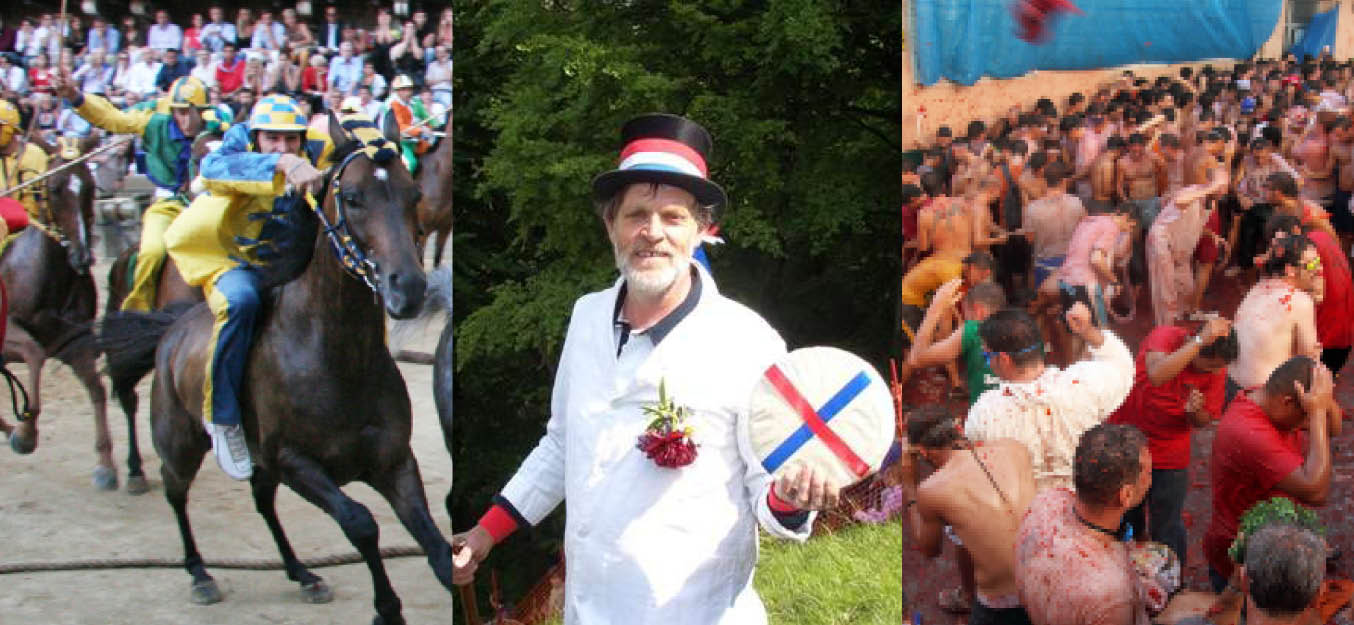
The half-forgotten yet still familiar habits and customs that maintain a social-class system beyond its original state and why those habits and social customs provided people with a sense of belonging and common cause in the country and the social hierarchy where they live.
A Brief History:
Cultural sensibilities and affiliations arise and deepen through people’s need to express themselves and belong to a social group in a place they can call home. People develop traditions and habits, play time-honoured games, or participate in rituals and festivals, which can often last generations or centuries.
These social customs and rituals become a culture performed physically in sacred or hallowed places, whether religious or sporting events. They can develop verbally in song and language through dialect and pronunciation. Thet can exist in various mysterious, eccentric, or even dangerous forms.
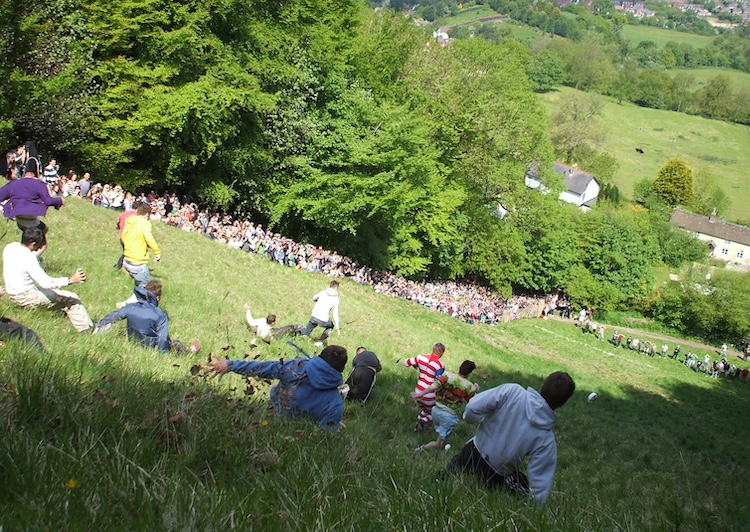
People still perform or play odd or dangerous activities today, for example, in the UK at Cooper’s Hill Cheese Rolling and Wake in Gloucester or Bourton-on-the-Water’s football match played in the river itself. In Workington, West Cumbria they play a rough and tumble version of Hand Ba’ called Uppies and Downies- see the links below for further information.
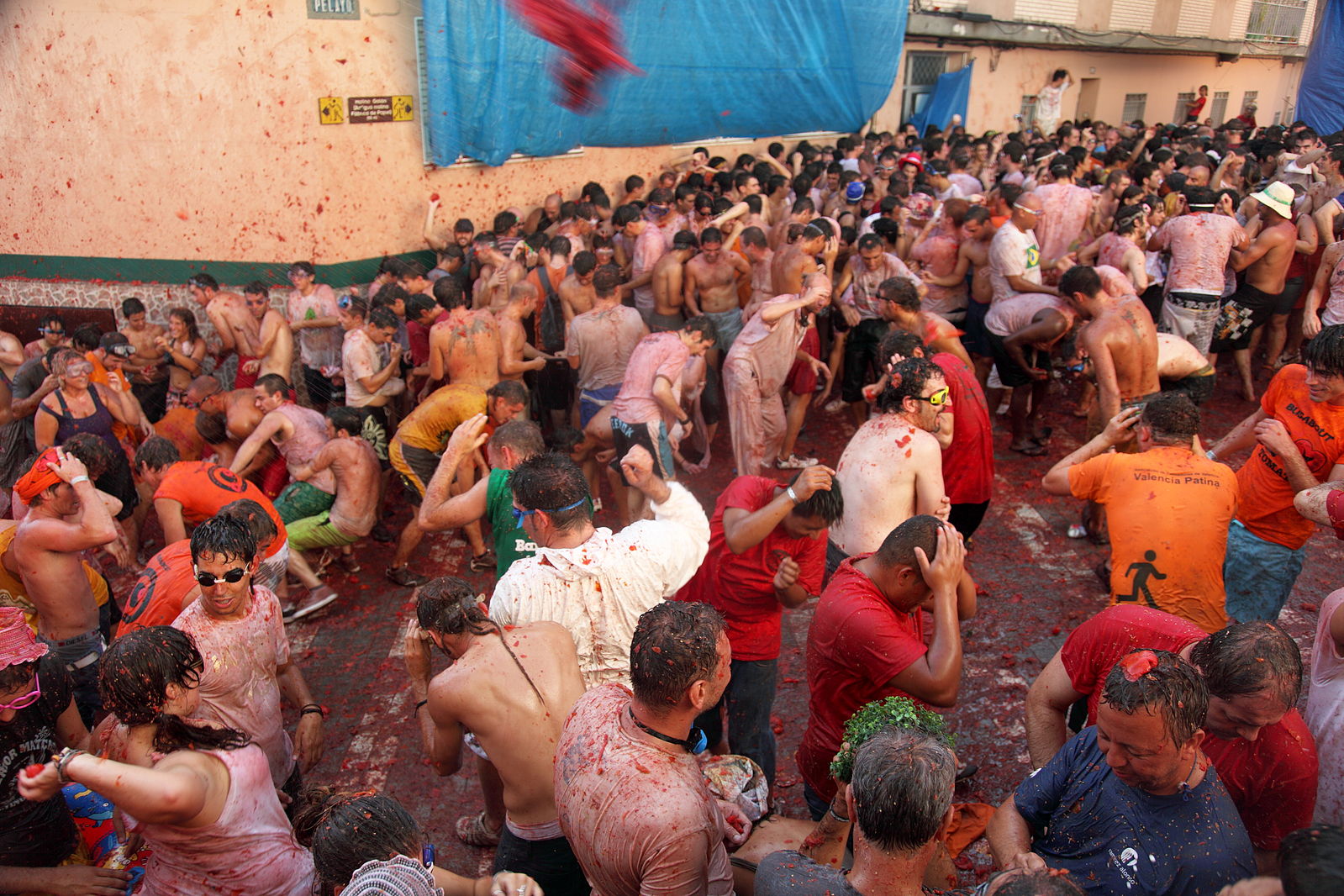
In Spain there is a tomato fight in the Valencian village of Bunol or the famous Palio Horse Race in Siena, Italy still held every July, as other examples of eccentric or mildly dangerous yet exciting events each in turn with their own local histories, all great for European tourism in the 21st century.
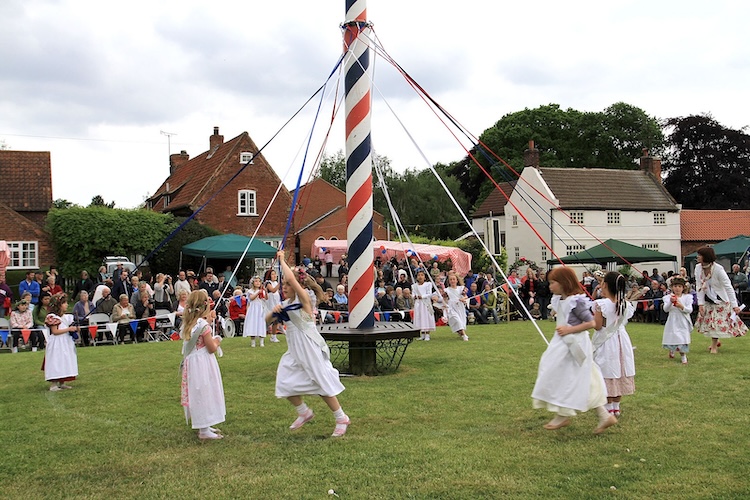
There are still county fairs with livestock auction marts and pedigree-shows, an existing vestige of the old agricultural calendar and seasonal cycle. Agrarian customs have incredibly old roots, for example, with spring festival with their maypole dancing or the King and Queen of May which celebrate fertility and rebirth clearly emulate seasonal cycles of the planting of crops.
Ancient Roman Gods
This is a throwback to the role played by the ancient Roman Gods such as Ceres the Goddess of grain crops (cereals) and her daughter Persephone retuning from the underworld (after winter had passed) to the upper living world to begin the growing season. Notably, Greek, Roman, Norse, Celtic and Germanic cultures all had their own deities for fertility and rebirth.
Climate and local topography generated agricultural or industrial practices that shaped and moulded the common experience of local communities for generations. From the mid-14th century, in the aftermath of the Black Death in Britian due to labour shortages, indentured labourers were able to free themselves from their landlords’ servitude and become journey men.
A journeyman could demand better wages and move between employers. More skilled artisans, like coopers or blacksmiths move to the towns and diversified their customer base. Textile and leather merchants arose from market days and an urban middle-class arose, first since Roman times, and under local laws and customs (within the King’s Realm). At this time merchants established trade guilds and leagues, such as the Hanseatic league which stretched from Britain, throughout the Baltic States, Germany into central Europe.
Early Middle-ages
In the early middle-ages, life was more regulated around the agricultural cycle and ecclesiastical life. This provided security and certainty for people working on their smallholding or Lord’s estate with their annual calendar for religious festivals and agricultural events. Although social and physical mobility of the yeomen, peasantry and serf classes was more restricted.
An exception was for mandatory military service at their lord’s behest, as evident in the hundred years’ war. At the Battle of Crecy in 1346, a major early victory for England over France, where commoners, such as yeomen and peasantry, won the day as long bowmen cutting down the aristocratic French heavy cavalry charge. A similar archery tactic was effective at the Battle of Agincourt in 1415, made famous by Willaim Shakespeare’s play about Henry V.
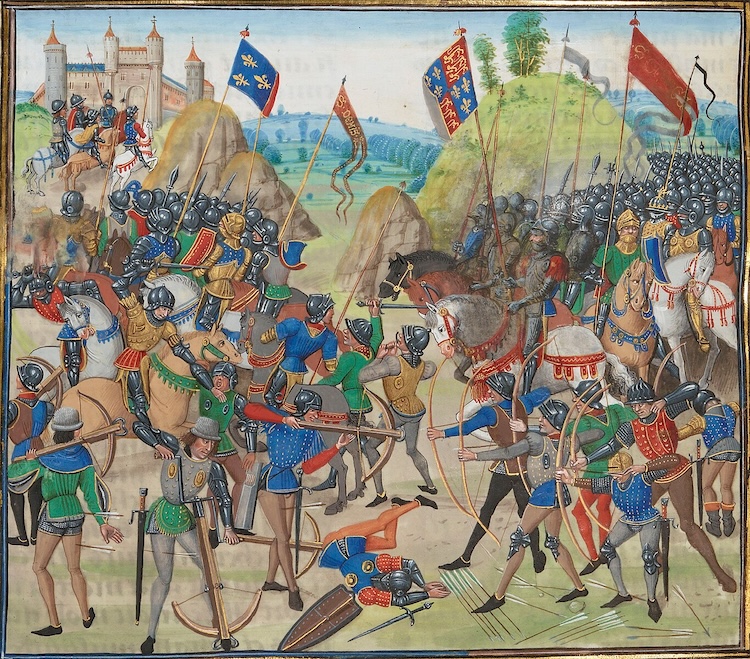
Historian Michael Wood’s ‘Story of England’ published by Penguin Books is a worthwhile read on this subject, along with the BBC history series (when available on BBC I-player). An older and detailed read is James Frazer’s ‘Golden Bough’ although it has outdated viewpoints- see the suggested reading below.
Throughout the 19th century in Britian the population moved from the land to the urban centres for work and opportunity, including leaving for the colonies or dominions such as Australia, Canada, and the fast-developing USA. Meanwhile, dominant local industries such as the cotton mills in Lancashire, coal mines in Durham or steelworks and ship-building yards in Glasgow or Tyneside and Teesside provided the employment opportunities which lasted for generations.
The decline caused by global competition, lack of investment through post-war economic malaise, and managerial lethargy which by the 1970s was highly visible with derelict industrial scarring landscapes all over Britain. Professionally managed or strategically important businesses adapted and survived, namely, smaller precision manufacturers, energy, and defence companies with government assistance plus electronic and a nascent biotechnology sector. However, the mass population remained, in the main, where it had been located since before industrialisation.
Long-term industrial practices
The social legacy of long-term industrial practices remained with overcrowded tenements, use of washhouse and public-house banter, with leisure activities such as football and beer drinking, or playing in brass bands or due to lack of room pigeon-racing. Although municipal infrastructure and improvements from the mid-19th century and then the post-war housing booms improved conditions, with modern technology and healthcare more so in recent decades. Established social traditions of football, brass-bands and even pigeon-racing continue to this day.
The once prosperous Steel-Belt across the Northeastern and Midwestern USA has faced similar post-industrial decline in recent decades and now referred to as the Rust Belt. However, the regional population still identify with the status of blue-collar workers, and they still enjoy their own version of football, beer, and music. Politicians pander for their votes despite their out-of-favour habits with the political or wealthy coastal elites. (One whose use of the word ‘deplorables’ has gone down in history).
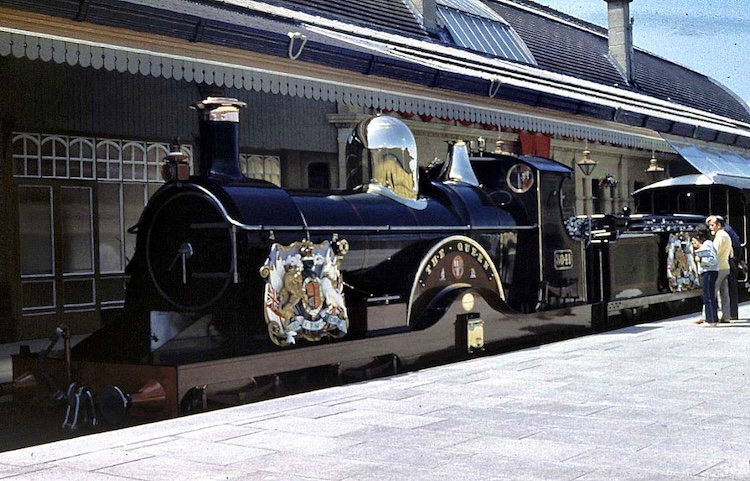
In the 19th century the coming of the railways allowed local trades holidays to be set during the better summer months. These provided recreational breaks from long factory shifts for the urban-based working-class. The boom in mass travel excursions created a plethora of seaside pastimes and pleasures such as tea-dances, and singsongs to promenades along the pier with sandcastles and donkey-races on the beach. This regular mass temporary migration helped produce thriving seaside communities, no longer dependant on fishing for a living.
These seaside communities still exist along with their tea-dances. Indeed, the BBC’s flagship light entertainment show Strictly Come Dancing has an annual pilgrimage to Blackpool. However, since the explosion in overseas holidays from the 1970s with cheaper-air fares and competition for tourism seaside resorts have also seen steep decline.
During the 19th century, leisure time was more limited and regulated by working practices. People still held firmer religious convictions, principally Christian, and these religious and cultural traditions referred to above remained fixtures in local communities across Britain.
It was not until the later decades of the 20th century with the introduction flexible working practices and decline in church attendance that social habits became to shift. Similar occurred in countries such as Germany and the Benelux countries. However, the siesta has remained a popular cultural pastime in Spain and Mediterranean countries while the heat and climate play their part too.
Customs and traditions mixed and evolved
From the18th century and through the effects of mass-emigration from British or European countries developing nations, like Canada, Australia or the USA developed similar cultural practices. Notably, these customs and traditions mixed and evolved through re-interpretations and infusions from other émigré-countries creating new varieties, for example, pizza, baseball, and modern Halloween.
The point being people from all social classes had distinguishable customs, traditions and habits which rooted them, for better or worse, in a place with a recognisable status quo due to their work, location and leisure habits. The industrial social hierarchy formed of upper-class landed aristocrats and new-age industrialists, middle-class merchants, professions, and managers supported by a huge array of working-class artisans and labourers, including those still on the land.
Namely, old land-owning aristocrats on their country estates still ran the agrarian economy. They oversaw the growing of crops in the fields or the rearing of animals to feed the nation. The entrepreneurial class or soldier-adventurer from the colonies- if successful or alive from their endeavours- could join the upper classes to enshrine their new wealth and status. The mingling of old and new money caused its own social rankles, as it continues to do so today.
These occupations, over time, fostered the local characteristics of pronunciation and dialect. The provision of education, and development of artistic styles and architectural expression created buildings and recreational places such as parks, stadiums, and landscaped woodlands.
Sporting traditions
In terms of sporting traditions think of the still existent attitude between football and rugby football by those who play one sport and not the other. Notably, Willaim Webb-Ellis credited with inventing Rugby Football in a British Public (private) school of the same name. However, attitudes towards public schools still elicits class controversy and debates over privilege.
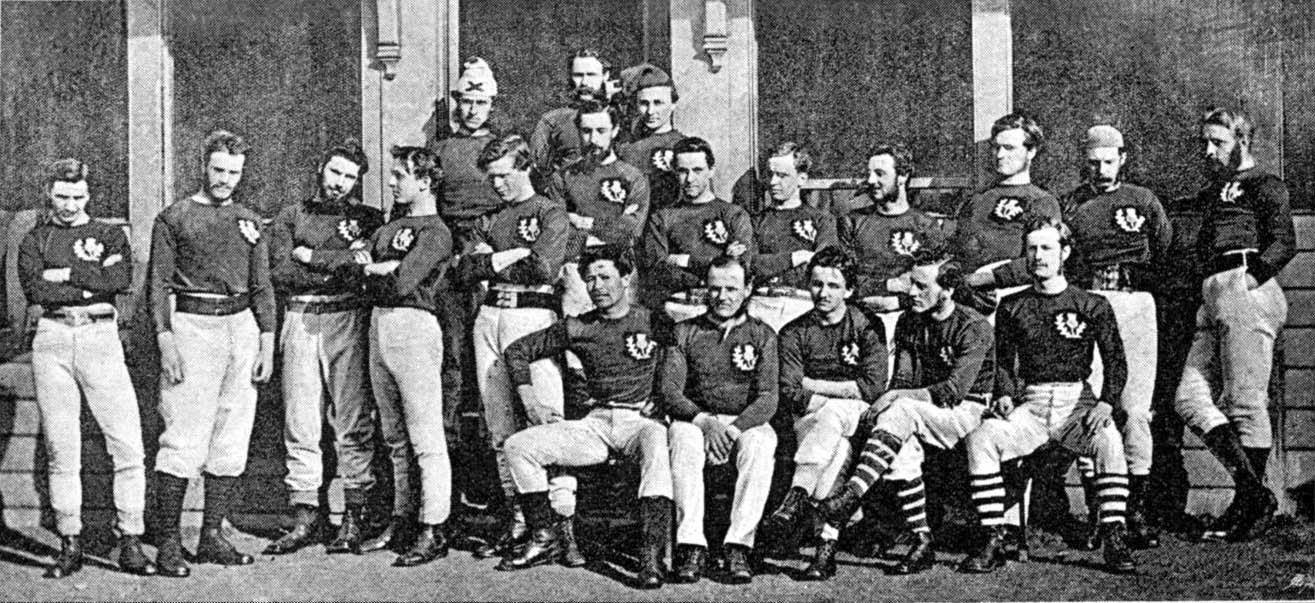
Both sports are now professional and yet the class distinction lingers, regardless of the rewards available to modern players. The supporters carry the culture, where football grew alongside the industrial towns and cities reflected in the working-class ethos that remains. Whereas, Rugby Football had the country or public-school setting for the gentry and professional classes. The exception being the Mill towns of the Scottish Borders, Yorkshire and Lancashire where Rugby Union and League flourished, caused by something in the uplands and byways of which local folklore may illuminate.
Karl Marx and Fredrich Engels
The industrial socio-economic structure, in concert with living conditions and political environment in the 19th century, also produced the ideological background in which the labour movement arose. In the 1840s Karl Marx and Fredrich Engels developed their communist manifesto for a workers’ revolution, firstly, to create a socialist state, which would inevitably lead to the communist utopia. Their economic theory predicated on the collapse, due to internal contradictions, of the capitalist system which the existing industrial economy had built. It replaced the feudal system during the 14th century (as opposed to later cultural Marxism based on a cultural critique).

Immense social changes of two world wars in the 20th century altered working practices and habits in traditional roles of the sexes. This was to have far reaching consequences to the structure of the prevailing social-class system. The shift from an industrial-age of heavy-industry to the development of the advanced-industrial economy with electronics, nuclear power accompanied the social-upheaval brought about by inventions such as the contraceptive pill. Recent high-tech innovations, such as nanotechnology, gene editing and social-media platforms, are bringing further disruptive change to employment, social values, and modes of behaviour of yet unknown outcome.
In countering the post-war success and rising prosperity of the capitalist system. Later 20th century neo-Marxists developed cultural Marxism and critical theory, which created the radicalism of 1960s student politics. Critical theory, as proposed by philosophers like Herbert Marcuse, has laid the theoretical roadmap for the late 20th and early 21st century cultural-consciousness argument which has de-constructed the old socio-economic class model and opened it up for a re-appraisal of political viewpoints outside its previous parameters.
Will the old social-class system steeped in time-served occupations, sporting pastimes and places or cultural habits and expressions become antiquated and out-of-touch or will they evoke a strong social backlash against those who promote such radical political revisionism?
This is a question of increasing complexity and will feature in further cultural blogs on the Little Deal Clincher.
This blog continues next week.
LDC April 2021
Further Information, references, and suggested reading –
BBC News Service, (2021), ‘Bourton-on-the-Water Crowds Enjoy River Football Match’ BBC News London, UK. Available Online At: Bourton-on-the-Water crowds enjoy river football match – BBC News
Britannica, (2024), ‘Rust Belt’ by J. Wallen Feldt, Encyclopaedia Britannia Inc, 2024. Available Online At: Rust Belt | Definition, Map, States, & Cities | Britannica
Frazer, J. (1922), ‘The Golden Bough’ Penguin, 1996, UK.
World History Encyclopaedia, (2024), ‘The Hanseatic League – Trade in the North and Baltic Seas c.1400’, by S. Netchev, World History Publishing 2024, UK. Available Online At: The Hanseatic League – Trade in the North and Baltic Seas c. 1400 (Illustration) – World History Encyclopaedia
Wikipedia, (2024), ‘Cooper’s Hill Cheese-Rolling and Wake’ Wikipedia Foundation Inc. 2024. Available Online At: Cooper’s Hill Cheese-Rolling and Wake – Wikipedia
Wikipedia, (2024) ‘La Tomatina’, Wikipedia Foundation Inc. 2024. Available Online At: La Tomatina – Wikipedia
Wikipedia, (2024), ‘Uppies and Downies’, Wikipedia Foundation Inc. 2024. Available Online At: Uppies and Downies – Wikipedia
Wikipedia, (2024), ‘Palio di Siena’, Wikipedia Foundation Inc 2024. Available Online At: Palio di Siena – Wikipedia
Wood, M. (2010) ‘The Story of England’, Penguin Books 2010, UK.
Photos:
Wikimedia Commons
Cheese Master
https://commons.wikimedia.org/wiki/File:CheeseMaster.jpg

Cheese rolling
https://commons.wikimedia.org/wiki/File:CheeseRolling.jpg

La Tomatina
https://commons.wikimedia.org/wiki/File:La_Tomatina_(25.08.2010)_-_Spain,_Bu%C3%B1ol_13.jpg
_-_Spain,_Bu%C3%B1ol_13.jpg)
Palio Horse Race https://commons.wikimedia.org/wiki/File:Mossa_lg_il_palio_del_16_agosto_2006_(7).jpg
.jpg)
Maypole Dancing https://commons.wikimedia.org/wiki/File:Maypole_Dancing_in_Wellow_-_geograph.org.uk_-_1888947.jpg

Battle of Crecy
https://commons.wikimedia.org/wiki/File:Battle_of_crecy_froissart.jpg

Steam train
https://commons.wikimedia.org/wiki/File:Royalty_and_Railways,_Windsor.jpg

Scotland Rugby team 1871
https://commons.wikimedia.org/wiki/File:Scotland_rugby_team_v_england_1871.jpg

Karl Marx
