
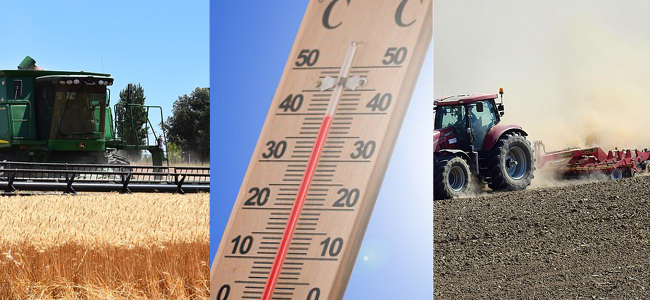
Harvest 2026 to Those with Rain and Those Without.
In conversation over the weekend of 8/9th August Little Deal Clincher learned from farming friends that due to southern Scotland having more rainfall over the growing period for this season’s cereals yields were within normal expectations and the quality reasonable (Farming Online Prices: Prices).
Those with livestock- cattle, sheep, and poultry- also mentioned prices were steady, not as good as 2025, but altogether not too bad. An optimistic market appraisal indeed from Scotland’s lowland farmers (AHDB Prices: Markets and prices | AHDB).
However, for farmers from Yorkshire, the Cumbrian Lakes southwards it sounds that harvest 2026 has been far from reasonable with yields a third less than normal and of a poorer quality which clearly effects the prices paid for the grain. Tough times ahead for those badly effected farmers. Will there be any help available?
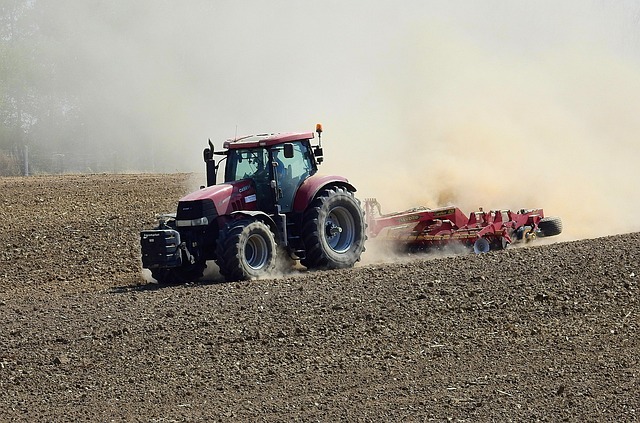
James Rebanks, a Cumbrian fell farmer himself, in his UnHerd article writes that farmers are, ‘projected to lose some £390 million in crop value’. Dry conditions also effects livestock, including milk production, as water and feed needs secured from elsewhere and regularly over the dry period. Expect to pay more for milk, vegetable, and meat over the coming weeks. He adds that ‘efficient’ monoculture type farming can lead to degraded soils with ‘quite low levels of soil organic matter which dries out quicker in droughts’ (UnHerd, 2026).
The FT reports that farmers in Devon start harvesting organic vegetables,’ at 5am and aim to finish at 2pm’ where the drivers ‘set out early to deliver the vegetable boxes from 6am’ to customers, business founder Guy Singh-Watson adds the drivers ‘carry extra ice packs to keep the produce cool’ a development he didn’t envisaged happening during his tenure. Sing-Watson states after four decades of record keeping for planting and harvesting the predictive models for market readiness have been ‘rendered increasingly useless by swings in temperature and rainfall’ (FT, Agriculture, 2026).
France is facing severe challenges to ‘protect animals’ in regions such as Nouvelle Aquitaine ‘even after installing ‘increased ventilation, misting, and changes to feeding’ with ‘temperatures above 40C in late June [which] caused mass-deaths in pig and poultry farms’ (FT, Argiculture,2026).
The Economist writes that farmers in Essex ‘can’t remember finishing a harvest in July’ adding their cropped ‘fields have yielded a third less wheat and nearly two-fifths less barley than normal’ with the crop ‘just shrivelled.’ The article further warns that although shoppers are unlikely to see shortages due to the amount of milling wheat that is already imported into the UK ‘the real cost will be borne by farmers’ who sell much of their wheat for animal feed and notes last year’s ‘drought cost arable farmers over £800 million’ (Economist, Farming, 2026).
Practical Solutions
Experts at University College London suggest practical solutions to such extremes of heat in the UK are to plant ‘varieties more resilient to drought’ and use ‘irrigation technologies’ rather than rely on rainfall like Australia and California (Economist, Farming, 2026).
Solutions such as those and promoting better soil conditions as Rebanks notes from the Rothamsted Institute that ‘every 1% increase in soil organic carbon raises the soil’s water holding capacity by about 354,000 litres per hectare’, therefore water retention of the soil is a critical factor (UnHerd, 2026).
Rebanks continues expressing concerns that due to Brexit, changed geopolitics and climate ‘old assumptions on which we built our food systems no longer hold [….] the risk sharing balance of old, between state and farmer, has vanished.’ Synthetic nutrients sourced via the Staits of Hormuz, and access to the ‘EU’s food system’ has ended post-Brexit restricting imports from world markets which could leave the UK vulnerable and ‘naïve about the risks’ to food security (UnHerd, 2026).
In addition, available UK farmland given over to alternative sues such as ‘solar farms’ and ‘biodigesters, to rewilding- [which] gobbles up vast acres’ of once productive land, seems fair comment’ (UnHerd, 2026).
His point is less about ‘efficiencies of scale’ to produce ‘cheap food- via mechanised monocultures’ and more about creating a,’ food system that is resilient and robust’ from healthier soil. Rebanks concludes with a comment that ‘our time is coming’ and like others we ‘are having to learn how to farm in such harsh conditions,’ (UnHerd, 2026).
As a counterpoint from a reader’s comment about the Cotswolds, again due to heavier rains in the spring, and the summer heat to ripen the wheat harvest has proved to be sufficient. This suggests that due to local and seasonal weather patterns these wetter areas have escaped the worst of the drought conditions which have blighted drier areas.
The Burning Question
On the same issue of dry hot conditions creating fire risks on moorland is causing landowners and campaigners to disagree on ‘how to manage moorland in drying climate.’ Campaigners, aligned with Defra’s advisory body Natural England, prefers ‘peatland restoration’ to burning heather in the winter to ‘reduce the fuel load’ and the Countryside Alliance believes ‘controlled wet burning is the most effective way of doing that’ (FT, Environment, 2026).
Campaigners, like Who Owns England author Guy Shrubsole, complains as ‘peat bogs were drained’ to increase heather growth to provide better habitat for Red Grouse breeding on shooting estates and this has ‘turned upland moors in to a tinderbox.’ Defra adds wet burning ‘can dry out the soil beneath’ which effects the hydrology and ‘vulnerability to wildfires. Land Agent Mark Osborne counter-argues that ‘there’s simply not enough water’ along with other experts ‘suggest a mixed approach, including cutting [the heather or grazing sheep or goats], and rewetting the landscape and sometimes burning it’ (FT, Environment, 2026).
There seems an underlying political argument between the landed classes and rich urbanites enjoying fine dining choices in London of freshly shot Game versus activists with an axe to grind over land ownership and rural practices of the larger moorland estates. Not in question is keeping down the fuel load of the undergrowth and funding fire services to deal with wildfires prevalent in the UK’s sweltering summer of 2026.
LDC August 2026
References and Further Reading-
Economist, (2026), ‘Farming: Grain Drain: As the Climate Hurts Britain’s Wheat farmers, it’s Time to Adapt’, The Economist Newspapers Ltd 2026. Available Online at: As the climate hurts Britain’s wheat farmers, it’s time to adapt
Financial Times, (2026), ‘Agriculture: Climate Change: Europe’s Farmers Beat the Heat with Night Shifts,’ by Savage, S and Speed, M, The Financial Times Ltd 2026, London. Available Online at: Farmers move to night shift to beat the heat
Financial Times, (2026), ‘Environment: Glorious 12th: Fire Risks Threaten Lucrative Grouse Season,’ by Naji, C. The Financial Times Ltd 2026, London. Available Online at: ‘Glorious 12th’ kicks off UK shooting season as debate rages about its future
UnHerd, (2026), ‘Drought Is Pushing England to the Brink, Yields and Moral are Tumbling,’ by Rebanks, J. UnHerd Publications UK 2026. Available Online at: Drought is pushing England to the brink – UnHerd
Pics Image Combine harvester by Carlos Barengo from Pixabay
Thermometer Image by Gerd Altmann from Pixabay