
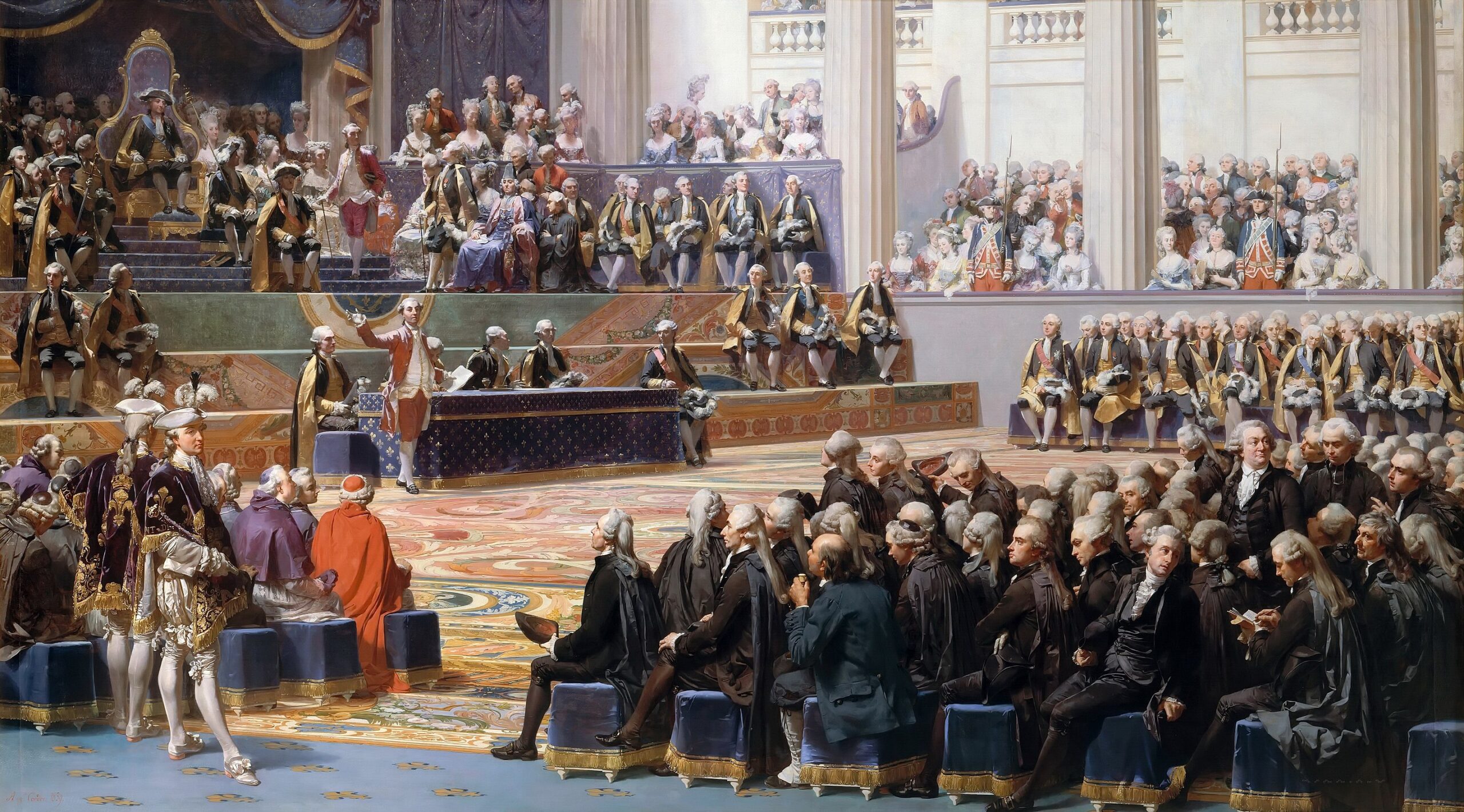
Nearing the quarter century mark of the 21st century why are we still using terminology from the 18th century, regarding the sitting arrangements of pre-revolutionary France’s Estates-General, forerunner to the current Assemblée National? Wherein, the royalists’ supporters sat on the right of the assembly and the anti-royalists on the left of Louis XVI’s legislature, who was executed by guillotine in 1793 during the French Revolution.
They seem rather incongruent terms in the 21st century to describe the political stance of an entire social-class system. Certainly, antiquated in reference to the layering and blending of political viewpoints, aspirations, or preferences held by most voting citizens up until very recently. The terms moderate, centrist- left or right, or the more hardline far-left and far-right still punctuate most political commentary including modern social-media platforms such as X or Tik Tok (or rather their subscribers’ posts do).
However, a more rigid and entrenched aspect of political identity has been solidifying over the last decade or so under the influence of radical post-modernism from the late-1980s and early-1990s and turbo-charged by social-media platforms.
From which social media-personalities can develop a large following and build a brand identity where their political preferences become seen as a badge of honour or as can happen the opposite they can become, ‘problematic’. It is observable that certain beliefs and affiliations are increasingly essential to be recognised and accepted as a member of a political affiliation or grouping.
These are increasingly unlikely to represent older social-class structure recognisable since the emergence of the labour movements in the 19th century or the class-struggle a keystone issue developed by Karl Marx in his manifesto for a communist revolution for the working proletariat.
Currently, what are considered as left-wing and right-wing viewpoints? Diffen.com (2024) provides a left-and right-wing comparison chart covering the main political differences across a number of internationally contentious philosophical and social issues : Left Wing vs Right Wing – Difference and Comparison | Diffen. (this weblink has a chiefly US perspective).
There is also an accompanying comments section to read below the main article. It is worth considering the validity of the contrasting viewpoints. Notably, people who hold mixed or nuanced viewpoints across these issues can find it harder to maintain these beliefs or preferences with the rise radical identity politics, especially with the emergence of cancel culture. This can itself be expressed as a resurrection of a spectre from earlier Soviet Union or European fascist regimes of the 1920s and 1930s.
The important point to clarify remains whether 21st century socio-political viewpoints are still relatable to a 19th– early 20th century social-class structure, still using 18th century terminology, which are politically manifested in national parliamentary systems. Here, the labour movements are meant to represent the working classes, with broadly speaking, the conservatives or republican parties representing the managerial classes. Is it time for a radical re-organisation and re-classification?
Looking at the Diffen.com comparison chart, agreeing to and fully complying with such a list of left- or right-wing viewpoints, should not determine your complete political allegiance or place in a social hierarchy. This degree of acquiescence reduces the effectiveness of both the elected parliamentarian and the electorates full political expression which is contrary to the democratic principle of free expression of individual voice to debate the common Weal within a representative body.
A recent Robert Scrimsley article in the Financial Times (2023) describes an ‘unwelcome feature of modern politics,’ across the so-called political spectrum that requires political activists to ‘unquestioningly’ support the entire plethora of political policies and viewpoints of their chosen group as having ‘to buy the whole album’.
This amplifies the need to value nuanced opinions where people can hold varying opinions. This should be encouraged without being seen a traitor to the cause or be purged from social -media platforms, malign one’s career, or worse charged with a crime. All these actions resonate the spectres of writers like George Orwell who warned modern society about such from the 1940s.
In addition to the views shown in the Diffen.com comparison chart. The FT article (2023) mentions the issues around supporting or challenging climate change, transexual and radical racial politics, China hawkishness, or Israeli disapproval or support as the,’ ferocious struggles,’ or touch-stone issues of political identity within the Western political cannon. Is dissent from your chosen group even contemplatable with these tumultuous causes without expecting severe retribution from those who appear to know what’s best?
The issue of political identity and allegiance to your group-identity often seems more important than any actual innate sympathy or understanding of the wider issues in question. A recent, almost comical example, of a radical political stance being expressed was- Queers for Palestine. A stance which would not be so amusing for those who actual went to those regions or countries that enforced strict Islamist regimes and tried to be queer or gay (Western rights or beliefs would not hold sway).
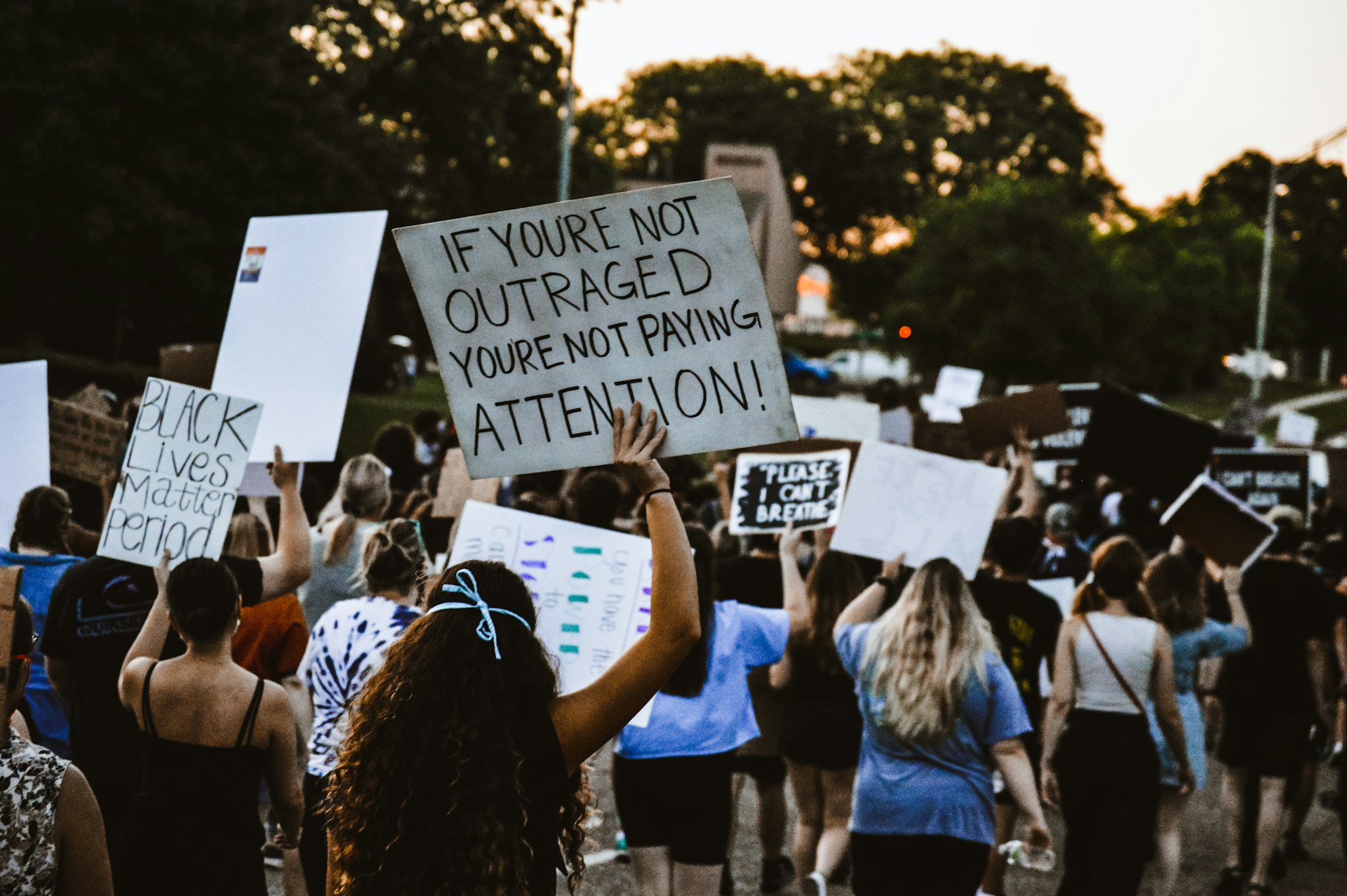
These ferocious ideological struggles can be defined as the continuation of the classic anti-capitalist anti-western colonial critique. This argument divides people into the Marxist categories of ‘oppressors and oppressed’ (FT.2023). However, does this seem rather simplistic to see everything through such an old narrow and divisive critique? The heat needs to be diffused much better through public engagement and institutional debate, whether parliamentary or corporate without resorting to sacking people, or cancelling them or holding rabid protests denouncing any diverse viewpoints out with their own.
With more structured debate people may better to which opinion they truly prefer or to which political identity they belonging to. They could develop and hold political views that truly reflect their political beliefs, or socio-economic needs in the society to which they live and contribute towards.
To the contrary, Scrimsley further adds in his FT article (2023) ‘the album culture is deepening’. Whether bitterly opposed views over Israel, climate, covid-19, or Brexit, this approach silences scepticism and narrows parties’ scope often crowding out dissenting views. As a result, this causes party activists to ‘select candidates in their own image’ and further removes political moderation and compromise required to achieve a solution to entrenched positions (FT,2023). Democracy, personal freedom, and prosperity suffer.
The old terminology of far-left and far-right, is bandied about smearing opponents or signalling to supporters who is to be damned. Activists respond with predictable reactions when an incident occurs, or an accusation arises. These predictable reactions permit politicians and media-pundits to quickly determine the cause behind it and who is to blame.
The perpetrators and their supporters are immediately labelled far-left or far-right extremists. It is a never-ending merry-go-round of political disagreement often slipping into rowdy demonstrations with occasional sporadic violence.
Where any subsequent investigations can prove to be a formality to reinforce the already held opinion. It has an echo of modus operandi of Lavrentiy Beria, the most ruthless and longest-serving secret police chief in Joseph Stalin’s reign of terror in Russia and Eastern Europe with his infamous boast of ‘show me the man and I’ll show you the crime’ (Oxford Eagle, 2028).
Individuals can hold a plurality of views that can be contradictory and in tension with each other. Reasoned debate creates compromise and understanding leading to agreements and co-existence in zones of toleration. This is the road that needs to be taken to break argumentative habits and end using outmoded terms.
Political identity should reflect what someone thinks and where they fit into contemporary society, and not a confusing choice of preferences which suit the political agenda of those able to manipulate the emotions and opinions of others to suit a subversive agenda of their own creation.
There shall be further blogs on the social class system and the political motivations behind presupposed political identities.
LDC
Further Reading and References-
Diffen.com (2024) Available online at : Left Wing vs Right Wing – Difference and Comparison | Diffen
Financial Times (2023), ‘Perils of a Rigid Album Culture in Politics’ by R. Scrimsley, Britain Section, Financial Times Ltd 2024, UK. Available online at: The perils of an unquestioning ‘album culture’ in politics (ft.com)
Oxford Eagle, (2018), ‘Show me the man and I’ll Show You the Crime’ by M. Henry, 2024 Oxford Eagle, UK. Available online at: Show me the man and I’ll show you the crime – The Oxford Eagle | The Oxford Eagle
PICs
Summer Protests 2020 in the streets of Nebraska Kalea Morgan Unsplash
Opening session of the General Assembly, 5 May 1789, by Auguste Couder (1839) shows the inauguration of the Estates-General in Versailles