
The first bad is in the form of disappointment from UK outsourcer Interserve PLC falling in to the hands of administrators (see 20th December 2018 blog for further discussion how and why).
A proposed debt-to-equity swap for its lenders was blocked led by its largest shareholder US Coltrane Asset Management as it was highly dilutive to existing shareholders, brave but to no avail, as post-administration all existing shareholders’ equity was wiped out.
 EY, the administrator, set up a new parent company to deal with creditors while its banks wrote off their debt, injected new equity and took over many operating companies with the CEO, Debbie White, still retained.
Many argue that this is the correct course for a large public company failure to take and not a government bail-out or outright collapse and liquidation as befell Carillion, another large UK outsourcer, in early 2018.
Hopefully the plans, to continue existing government services and allay concerns of employees and pensioners, that were made in advance of its own collapse avoid the difficulties faced by Carillion’s sudden demise. Although many unsecured creditors have a limited recourse for payment.
The disappointment is with the poor management and reckless over-expansion of once venerable British contractor. Tilbury and R.M. Douglas are two of the old construction names within the group brought low with Interserve’s outsourcing business model going awry- either they’ll be future spin-offs or the basis for rebuilding the new entity.
It reduces further a dwindling number of UK owned and managed large-scale contractors able to build or manage large scale projects. If UK contractors are going to attract the best staff and graduates to improve not only the performance of the industry but also its reputation as a competent player and major component of UK GDP.
The industry needs to offer better renumeration, resist buzzwords and fads to suit financial trends, reduce arguments over contracts and cash with simpler contract conditions and shorter payments terms.
At Interserve staff, subcontractors and clients, both, public and private won’t want to involve themselves until credibility is restored and that will take time, effort and some luck for the retained CEO.
Although it should be added that £60 million was spent in fees to consultants during Interserve’s slow demise highlighting the point about which careers pay more. It also provides a glimpse of where the sharpest minds operate- they may advise builders or provide their debt but just wouldn’t want to work for one.
Maybe find to the reason why and construction might stop being a dog of a career?
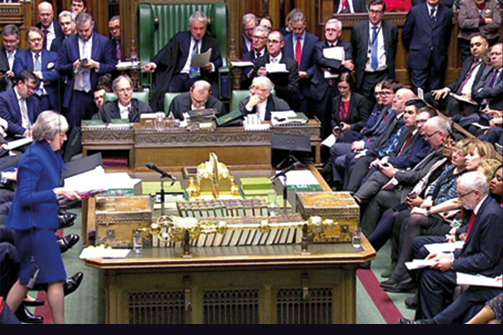
The second bad is the UK’s ongoing Brexit debacle with the Prime Minister Theresa May’s authority shot to pieces with her deal to leave the EU rejected heavily twice by parliament with a third attempt prevented without substantial alteration as stated by John Bercow the parliamentary speaker citing ancient parliamentary protocol.
MP’s remain divided on how the UK should leave the EU however the vote to prevent a no-deal departure has been passed with a request for an extension to leaving sought. The question is how long and to what purpose is the delay?
The requirement is that parliament act in the national interest. MPs need to resolve Brexit and build a consensus on the decisions of not leaving without a deal and extending the leaving date- personally the longer the more likely to make the necessary arrangements over trade, travel and Border issues.
Theresa May should also stop pushing her deal and act as a consolidator of opinion rather as a spent dictator of shaping events for a deal nobody wants.
Either way the county will end up in a voting booth at some point for another referendum or election or both, maybe add in another EU parliamentary vote or a Scottish referendum also, if matters rumble on too far. Time to end a bad job and act in the country’s best interests.
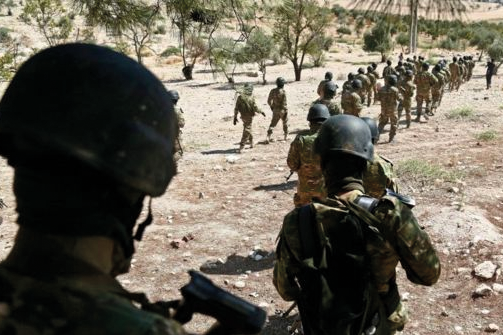
The third bad and the worst by a considerable degree is the devil’s brew of events congregating in Idlib province in north-western Syria.
Estimates are that,” 2.5 million people,” are caught in an area approximate in size to,” North Yorkshire,” which has increased in population by,” 600,000 since 2011,” at the start of the civil war with possibly as many as 30,000 militants intermingled with various factions of Syrian’s Defence Force (SDF).
These factions includes many terrorist organisations such as Hayat Tahir al-Sham (HTS) a faction derived from,” al-Qaeda linked Jabhat al-Nusra,” who along with the YPG, a US backed Kurdish faction which formed the bulk of the SDF, have pushed the Islamic State (IS) terror regime to the brink of defeat throughout Syria (FT,2019).
US president Trump has pledged to withdraw US forces from the Kurdish held areas of northern Syria. Turkey has severe reservations about the Kurdish presence along its northern border and views the YPG as a terrorist group itself.
The Syrian government regime, with Russian air cover and weaponry and Iranian backed Lebanese affiliate Hezbollah who supplied fighters in the ground assault against IS, wants to regain all Syrian territory from rebel held areas including Idlib.
Russia and Turkey made a deal to remove the terrorists from the,” area bordering the regime-held territory,” which has largely not happened with a full assault seeming ever more likely in Idlib province as numbers have only increased Russia contests with Turkey.
HTS has vowed to make a last stand and,” harnessed Idlib’s economy, extracting tolls and fees,” in preparation for the coming battle. Officials express that Turkey have a,” mission impossible,” task in trying influence any rebel factions in Idlib province (FT,2019).
How long can the tensions build before a political miracle can be reached to disperse and repatriate or re-house the extreme-militant groups and normalise a war-strewn area?
What’s more likely is a bloody battle in an overcrowded province to create what the UN describes could be the,” worst-scale humanitarian crisis of the 21st century,” and is the most bad imaginable of all.
LDC.
References and further reading-
Financial Times, (2019),” Idlib: Russia and Turkey dig in for a final Syria battle,” by Henry Foy, Chloe Cornish, Asser Khattab and Laura Pitel, Financial Times Ltd 2019, London UK. Website accessed 18th March 2019: https://www.ft.com/content/60d234fa-3e6a-11e9-9bee-efab61506f44
Financial Times, (2019),” MPs must act in national interest to resolve Brexit,” Editorial, Financial Times Ltd 2019, London UK. Website accessed 18th march 2019: https://www.ft.com/content/3a80f238-4823-11e9-8b7f-d49067e0f50d
Financial Times, (2019),” Interserve suppliers face losses from outsourcer collapse,” by Gill Plimmer, Financial Times Ltd 2019, London UK. Website accessed 18th March 2019: https://www.ft.com/content/1c5d2d4a-48bd-11e9-bbc9-6917dce3dc62